
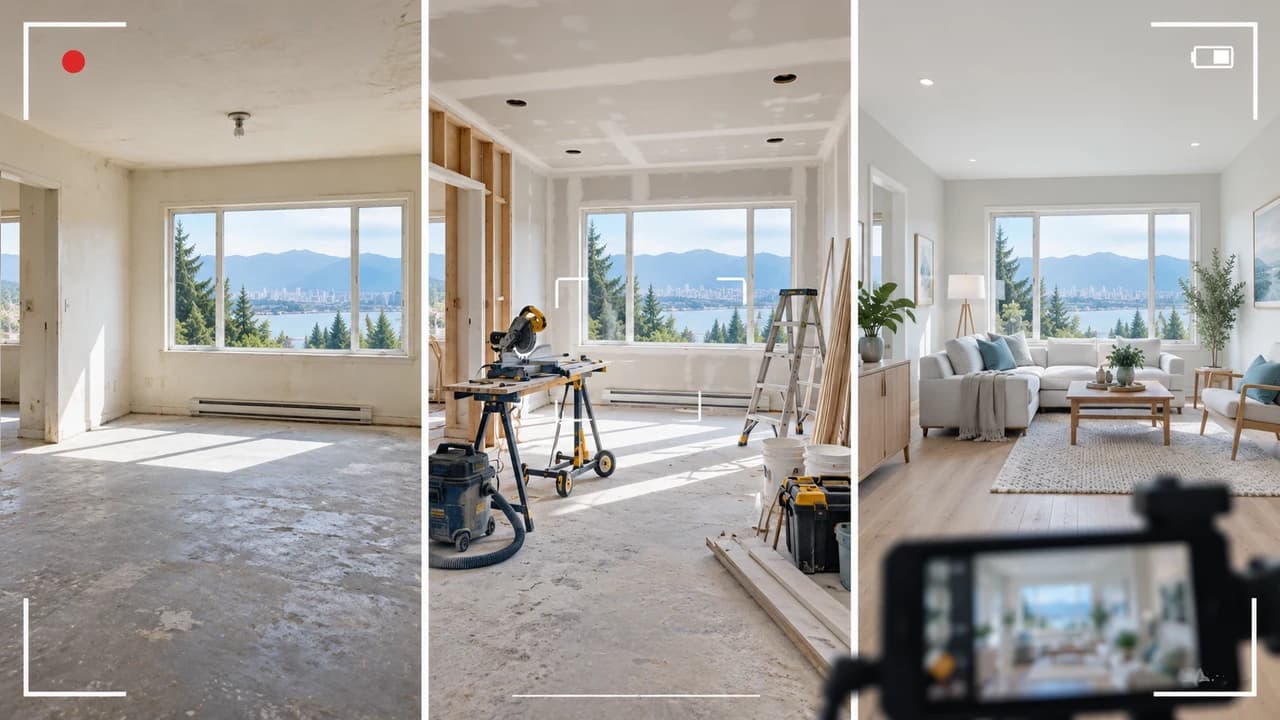
Vancouver renovation project video starts before demolition: plan matched views, site access and a truthful reveal.
Start the Vancouver renovation project video before work starts
Vancouver renovation project video is most useful when a prospective client can understand what changed and how the team worked, not just admire the finished kitchen. That means making a filming plan while the original space still exists. Once demolition begins, there is no honest way to recreate the exact before view. A design-build owner should identify the project goal, the audience for the film and which rooms or construction details will actually help explain the work. Do you want a portfolio case study, a short sales-page film, a series of progress updates, or material for a client handover? Those are different edits and may require different access.
Walk the site with the project lead and mark a few repeatable camera positions. A doorway-to-room view, a wide corner angle and one detail of a feature that will change can give the editor a clear visual comparison. Note the approximate camera height, direction and light conditions. If an angle cannot be replicated later because a wall moves, choose a second anchor now. Capture enough context that the viewer can tell it is the same space without relying on a dramatic graphic transition.
Treat this as a production brief, not a substitute for the contractor's inspection record. Technical site documentation may need dates, measurements, multiple viewpoints and access controls that a marketing film does not provide. A Vancouver corporate video production plan can turn approved project facts into a story, while the builder retains responsibility for its own compliance and construction records.
Before: record the original space without overstating its condition
A trustworthy before sequence establishes the starting point: how rooms connect, where natural light enters, what surfaces and fixtures are being changed, and which parts of the building remain untouched. Film a short walkthrough and stable matching views before crews remove cabinetry or close access. Capture wide context and specific details rather than only the messiest corner. If a room is occupied, first coordinate a clear time with the owner or site manager. Remove or avoid family photos, mail, documents, security screens and other private details that do not belong in a public portfolio.
Agree in writing who may approve filming and where the finished images can appear. Permission to enter a worksite is not automatically permission to publish the homeowner's address, face or belongings. Record whether the client allows exterior views, identifiable streets, employee appearances, spoken testimonials or use in paid advertising. If a claim about energy performance, structural work or savings is proposed, ask the qualified project owner for documentation and approved wording instead of inventing a claim in the edit.
Keep the before footage accurate. Do not make the old space look darker than it was, move damage into view for drama, or label a different room as the starting condition. A consistent composition is more persuasive than a manipulated contrast. Industry guidance on repeatable before-and-after angles likewise recommends planning views before work and documenting the process. For a buyer, those frames explain what the finished-space shots alone cannot show.
During: schedule safe, permissioned milestone coverage
The work-in-progress shoot should be tied to construction milestones rather than an arbitrary calendar. Ask the site lead when demolition, framing, installation, finishing and cleanup will be visually meaningful, and which of those windows are safe for a camera crew. Some work will be concealed quickly. The contractor's technical documentation of hidden work remains a separate responsibility; marketing footage must never be presented as proof of an inspection, code compliance or a completed installation. CompanyCam's construction documentation guide distinguishes systematic pre-work, progress and closeout records from casual images.
Before each visit, confirm site access, the person authorized to escort the camera crew, protective equipment and any restrictions around tradespeople, neighbours or occupants. Do not ask workers to repeat a hazardous task for a dramatic shot or interrupt a trade at a critical moment. If the site is too busy, get a short approved window or replace that scene with a safe detail shot of materials and tools. Film clean, identifiable actions that tell a buyer something useful: cabinet fitting, tile alignment, a design review or a material selection. Avoid promising that every phase will be captured if the construction schedule is still uncertain.
Log each take by phase, date, room, camera position and publication permission. Hold a few seconds before and after each action so the editor has usable handles. Take a matching frame from the original position wherever it is still accessible, and record a brief answer from the designer or project lead explaining a specific decision. These small choices give a video portfolio case study a coherent process rather than a random montage of power tools.
After: show the finished design and check every claim
The final shoot should happen after the relevant work is complete, the space is safe, and the owner or project manager approves filming. Leave time for cleaning, styling and removing temporary supplies; otherwise the edit may have to hide the very finishes the client paid to show. Repeat the marked before angles where feasible, then add a natural walkthrough that shows the relationship between the entry, primary room and important details. Capture material textures in honest light. If the project is only partly complete, call it a phase update rather than presenting it as a final reveal.
Ask the project team to review facts before narration or captions are locked. Check what the design brief actually requested, which trades delivered which elements, whether a material or fixture is identified correctly, and whether the work shown belongs to this project. A before-and-after edit should not silently substitute a rendering or an AI-generated view for the real result. Compare the original and final shots side by side for framing, orientation and context; difference in lighting may be unavoidable, but misleading colour treatment is not.
Decide what the audience should do after viewing. A portfolio page may need a concise account of the original problem, the design response and approved result. A social cut might lead with the strongest matched view and then show the craft behind it. Neither should imply a guaranteed outcome for another property. A local design-build company can reuse one well-planned capture across several channels when the rights and aspect ratios are agreed in advance; the quote should list those outputs rather than treating every crop as automatically included.
Turn the three stages into a usable production brief and quote
Before asking for a quote, send a one-page brief. Include the project city, type of space, approximate milestone dates, who controls access, the rooms to cover, a rough floor plan if available, privacy restrictions and the audience for the film. Then specify the outputs you need: for example, a website case study plus a short vertical edit, with captions or language versions if relevant. These are examples of scope, not a standard package or a promise of a particular price. Number of visits, locations, crew, interviews, sound and revision rounds will all affect a real proposal.
Name one person who consolidates feedback and one who approves publication. Agree on how missed milestones are handled, how a postponed site visit changes the schedule, who supplies approved project facts and how long the producer may retain the footage. Obtain written permission for identifiable homeowners, crew and private interiors before publication; review the actual intended channels, especially paid promotion. If permissions cannot be secured, use unidentifiable detail shots or keep the film internal rather than implying consent.
A useful review sequence is: confirm the before/after pairing; verify the process shots against real work; check names, materials and claims; inspect captions and crops; then approve a numbered final export. This gives your team material it can use without turning a beautiful film into a factual risk. To plan a Vancouver renovation or design-build project film, contact Steven Video Production with your project stage, access windows, intended audiences and deliverable list. We can scope the capture around real site milestones instead of trying to manufacture a before shot after the room is gone.
Frequently Asked Questions
When should I book video for a Vancouver renovation project?
Before demolition or material removal. The original-room view cannot be recreated honestly once work begins; plan the later milestone and final visits with the site lead.
What shots make a renovation before-and-after video credible?
Repeat a few wide views from similar camera positions, include enough context to identify the same room, show genuine process footage and check that final views represent the completed work.
Can progress video replace a construction inspection record?
No. A marketing video and a contractor's dated technical documentation serve different purposes. Do not present a promotional edit as evidence of an inspection or code compliance.
Do I need permission to publish a client's home renovation video?
Agree on access and publication with the property owner or authorized representative; separately clear identifiable people, private details, the intended channels and any paid advertising use.
How much does a multi-visit renovation project video cost?
It depends on site visits, crew, travel, interviews, editing, revisions and final formats. Share your project milestones and deliverables to obtain a project-specific quote rather than assuming a fixed package.
Ready to start your project?
Get in touch for a free consultation. I typically respond within a few hours.