
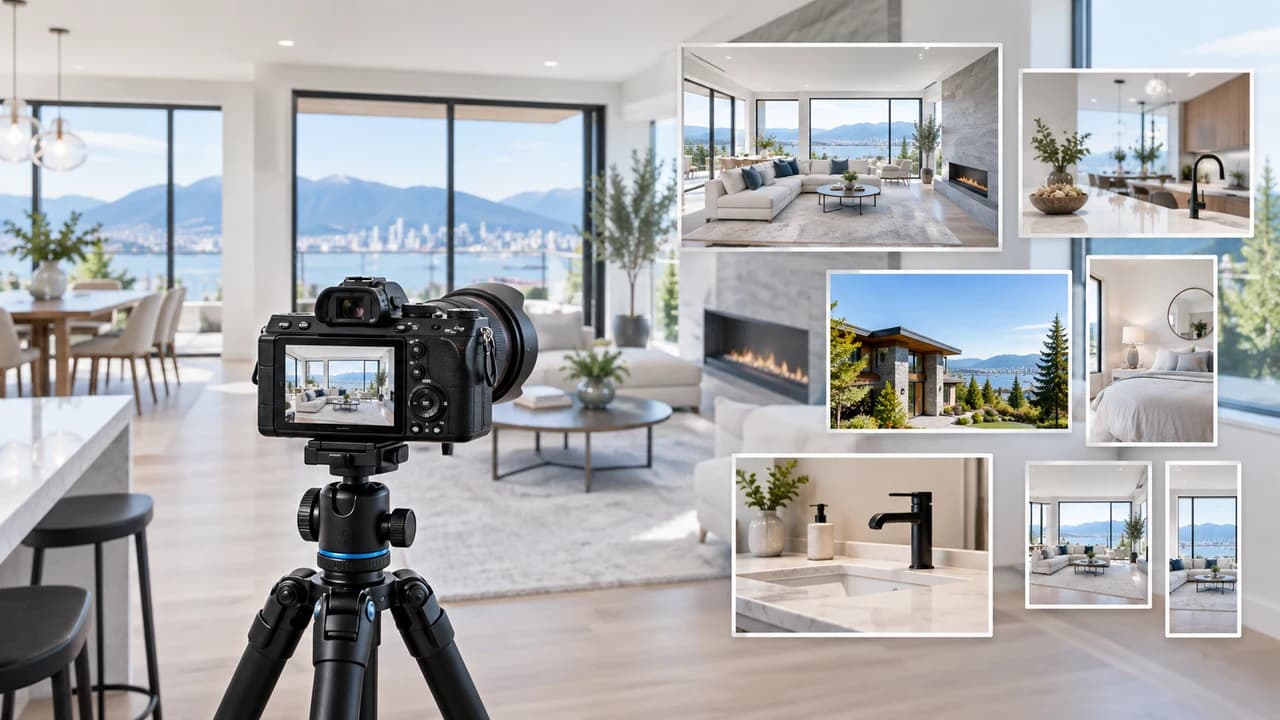
Vancouver real estate photography shot list guidance for rooms, details, exteriors, prep and delivery.
Build the Vancouver real estate photography shot list around the buyer journey
A Vancouver real estate photography shot list should help a buyer understand the property before it tries to make every corner look dramatic. The strongest sequence answers practical questions in a sensible order: What kind of home is this? How do the main rooms connect? Where does natural light enter? What features distinguish it? What is immediately outside the property? A complete list is therefore more than a catalogue of rooms. It is a visual route through the listing, designed for someone who has not visited yet.
Start with the intended buyer and the property type. A downtown condo may depend on the relationship between the living area, balcony and view. A family house may need a clearer sense of entry, kitchen, dining, bedrooms, yard and storage. A townhouse may require images that explain multiple levels and the transition to outdoor space. The same camera technique should not force every listing into the same template. The shot list should give priority to the spaces that affect the purchase decision.
Before photography begins, identify the listing facts that must be represented accurately. Confirm the property type, major rooms, outdoor areas, parking or storage that can be photographed, renovations the agent intends to mention, and any areas that should not appear. Separate factual coverage from optional styling images. Wide room photographs establish layout; medium views explain connections; selected details add character. Detail frames should support the listing rather than hide missing coverage.
A useful first draft can be divided into five groups: exterior and arrival, principal living spaces, bedrooms and bathrooms, supporting spaces, and details or context. Then mark every frame as essential, useful if time allows, or conditional on weather, access or readiness. Agents can compare this plan with Steven Video Production’s Vancouver real estate photography portfolio, then send the address, property type, selling features and target listing date through the contact page. That information lets the photographer adapt the list without promising an arbitrary number of images before the home has been assessed.
Prioritize the rooms buyers need to understand
The essential room list normally begins outside. Photograph the primary approach, front elevation and entry context when access, weather and surrounding conditions allow. For a detached home, a secondary exterior angle may explain the lot or architecture. For a condo, the exterior may be limited to the building entrance or an approved amenity area. Do not imply private ownership of common spaces or include a view that does not belong to the unit. Accurate context matters as much as attractive light.
Inside, the main living area, kitchen and dining space usually carry the most visual weight. Each needs a clean establishing frame that shows proportion and circulation. Open-plan homes may need one image that connects all three areas and separate views that clarify each zone. The goal is not to shoot every wall. Repeated angles can make a gallery feel longer without adding information. A reverse angle is valuable only when it reveals a meaningful connection, feature or view.
Photograph the primary bedroom and its relationship to an ensuite, closet, balcony or view where relevant. Secondary bedrooms should be covered consistently enough that buyers can compare them, but they do not all require the same number of frames. Bathrooms often benefit from one wide or carefully composed medium image plus a second view only when it reveals a separate shower, tub, vanity or important layout feature. Mirrors, glass and reflective fixtures require deliberate camera placement so the room is visible without turning the equipment into the subject.
Supporting areas depend on the listing. A dedicated office, finished basement, laundry room, mudroom, pantry, flex space, garage, workshop or legal suite can materially affect a buyer’s decision. Photograph them when they are part of the marketed property and ready to show. Hallways and stairs are usually useful only when they explain flow, architecture or level changes. The agent should flag any room name or use that requires careful wording. Photography can show what exists, but it should not make an unverified claim about permitted use, dimensions or legal status.
Use detail photos to support the property story, not replace coverage
Detail photographs are most effective after the essential rooms are secured. Their purpose is to reveal materials, craftsmanship or lifestyle cues that cannot be understood in a wide frame. Useful subjects may include millwork, stone texture, a distinctive fixture, an integrated appliance, a fireplace detail, original architectural character, a carefully designed workspace or the connection between an interior finish and the view outside. Each detail should answer a simple question: why does this feature matter to the intended buyer?
Avoid filling the gallery with generic décor that will leave with the seller. A close-up of a vase, coffee cup or folded towel can look polished but may communicate nothing about the property. Styling details are appropriate when they improve rhythm or help a social post, but they should not displace a room, exterior or functional feature that buyers need to see. The agent and photographer should distinguish a property feature from a staging accessory before the list is finalized.
Details also require restraint in occupied homes. Personal photographs, names, school information, medication, security controls, computer screens and documents should be removed or hidden before arrival. A tight crop can still reveal private information at full resolution. Likewise, avoid emphasizing a damaged surface or temporary object unless it is relevant to an accurate representation of the home. The photographer’s role is to present the property clearly, not to create a misleading visual record or a privacy problem.
Plan a small number of landscape and portrait-friendly details when the marketing plan requires both listing pages and social media. A horizontal image may fit a website gallery while a vertical composition gives the agent room for a Story or Reel cover. That does not mean every subject must be photographed twice. Identify the few hero features most likely to be reused, and create alternate orientation only where composition and publishing needs justify it. This keeps the session focused and gives the final gallery enough visual variety without inflating it with near-duplicates.
Treat exteriors, neighbourhood context, twilight and drone as conditional coverage
Exterior coverage depends on access, weather, traffic, parked vehicles, season and the direction of light. A useful plan identifies the front approach, principal elevation, outdoor living areas and meaningful relationship to the lot. For strata properties, it may also include permitted amenities or building context, but access and photography rules should be confirmed in advance. Neighbourhood images should represent nearby features honestly and should not imply that a park, waterfront or facility is part of the property.
Vancouver conditions can change quickly. Wet pavement may add reflection, but active rain can obscure views and create lens problems. Flat light can be suitable for some façades; hard midday sun may create deep contrast; foliage and snow can hide or reveal different property features. The photographer and agent should decide which exterior frames are essential on the scheduled visit and whether a weather-dependent return is worth planning. That decision belongs in the scope rather than being assumed.
Twilight photography is a separate visual objective, not a filter applied to daytime files. It depends on a narrow light window, working interior and exterior fixtures, controlled window coverings and a property that remains ready after sunset. Decide which elevation or outdoor area is the hero before the light changes. If the listing needs both daylight coverage and true twilight images, the schedule and quote should state how that additional timing will be handled. Do not assume twilight is included in every photography package; check the current real estate media pricing and options.
Drone photography is also conditional. It may help explain a large lot, setting, access, nearby landscape or relationship to surrounding features, but it is not necessary for every listing. Safe and lawful operation depends on the location, airspace, weather, launch area and current operating requirements. The shot list can describe the intended information—such as lot context or proximity—while leaving the final flight decision to the qualified operator on the day. Ground photography should still provide a complete core gallery if drone or twilight coverage cannot proceed.
Prepare occupied and vacant properties differently
An occupied home needs a privacy and reset plan. Remove personal photographs, mail, calendars, pet items, valuables, toiletries, visible cables, bins and excess countertop objects. Clear refrigerator doors and check reflective surfaces. Beds should be made, towels aligned, toilet lids closed and window coverings set consistently. The agent or owner should also arrange parking, pets, alarms, access instructions and any rooms that will remain off limits. These choices reduce interruptions and prevent personal information from appearing in the delivered gallery.
Do not leave all styling decisions until the photographer arrives. A photographer can make small adjustments to improve a frame, but moving large furniture, cleaning rooms or deciding what belongs in storage is not a reliable use of the scheduled session. Walk through the home from the front entrance in the same order as the shot list. At each space, remove anything that attracts more attention than the room’s function or selling feature. Then check the view from likely camera corners, because an object that seems harmless at eye level may block a sightline in a wide photograph.
A vacant property has different risks. Empty rooms reveal wall marks, floor transitions, uneven bulbs, construction remnants and scale ambiguity. Confirm that cleaning, repairs and trade work are complete, all fixtures operate, and access areas are safe. If virtual staging is planned, identify eligible rooms and agree on disclosure and visual accuracy requirements before editing. The original empty-room photographs should be retained as the factual baseline. Virtual furniture must not hide permanent defects or change fixed architecture.
For either condition, provide the photographer with one decision-maker who can answer questions about access and priority. If a tenant occupies the home, confirm notice and consent through the appropriate process before the session. If the property is under renovation, decide whether the current condition is truly ready to market. A clear readiness checkpoint protects the appointment, and it also helps the photography stay consistent with complementary Vancouver real estate video services when both are captured on the same visit.
Confirm orientation, sequencing and the final delivery checklist
A photography plan should end with the way the images will be used. Landscape frames usually form the core of a listing gallery because they display rooms naturally on property websites and larger screens. Portrait images can support mobile stories, agent posts and selected feature covers. Square or crop-safe compositions may be helpful for thumbnails. Instead of requesting every angle in every ratio, list the actual channels and let the photographer protect important subjects from likely crops. This creates useful variety without tripling redundant coverage.
Sequence the delivered gallery as a viewing experience. A common order starts with a strong exterior or principal interior hero, then moves through arrival, main living areas, kitchen and dining, bedrooms, bathrooms, supporting rooms, outdoor space and broader context. The exact order should follow the property’s strongest logic. Do not place all detail photographs at the beginning, and do not interrupt the route with repeated exterior frames. The gallery should help a buyer form a mental map while keeping the best features visible early.
Before publication, the agent should check that the address and listing match, every marketed major space appears, private information is absent, feature representations are accurate, windows and mirrors do not reveal avoidable distractions, and any virtually staged image is handled according to the intended disclosure process. Confirm file access, naming, resolution and any alternate versions included in the agreed scope. Also check that image selection aligns with the listing description; text and photography should not make contradictory claims.
The final checklist is short: essential rooms complete, exteriors and conditional options accounted for, hero features supported by details, privacy protected, orientations matched to real channels, gallery order approved and delivery files accessible. A good Vancouver real estate photography shot list does not guarantee a fixed image count. It guarantees that the right visual questions are asked before the appointment and verified before the listing goes live. That is what turns a folder of attractive photographs into a coherent, buyer-friendly presentation.
Frequently Asked Questions
What should be on a Vancouver real estate photography shot list?
Include exterior and arrival context, main living spaces, kitchen and dining, bedrooms, bathrooms, decision-relevant supporting rooms, outdoor areas and a limited set of property details. Mark twilight, drone and neighbourhood images as conditional when access, weather or operating requirements apply.
How many real estate photos does a listing need?
There is no responsible fixed number for every property. The total depends on property type, size, layout, marketed features, outdoor areas and delivery scope. Prioritize complete, non-repetitive coverage over an arbitrary image count.
Which rooms are most important in real estate photography?
The main living area, kitchen, dining space, primary bedroom, bathrooms and meaningful outdoor space usually deserve priority. Secondary rooms should be included when they affect the buyer’s decision or explain the layout.
Should real estate photos be landscape or portrait?
Landscape images usually anchor listing galleries, while selected portrait frames help with Stories, Reel covers and other mobile placements. Plan orientation around actual publishing channels instead of photographing every subject twice.
How should an occupied home be prepared for listing photos?
Clean and declutter, remove personal and private information, align bedding and towels, clear countertops, manage pets and parking, set window coverings consistently and identify off-limit areas before the photographer arrives.
Are twilight and drone photos included in every real estate photography package?
Do not assume they are. Both require separate planning, and drone coverage depends on safe, lawful operating conditions. Confirm current scope, pricing, access and weather contingencies before the appointment.
Ready to start your project?
Get in touch for a free consultation. I typically respond within a few hours.