
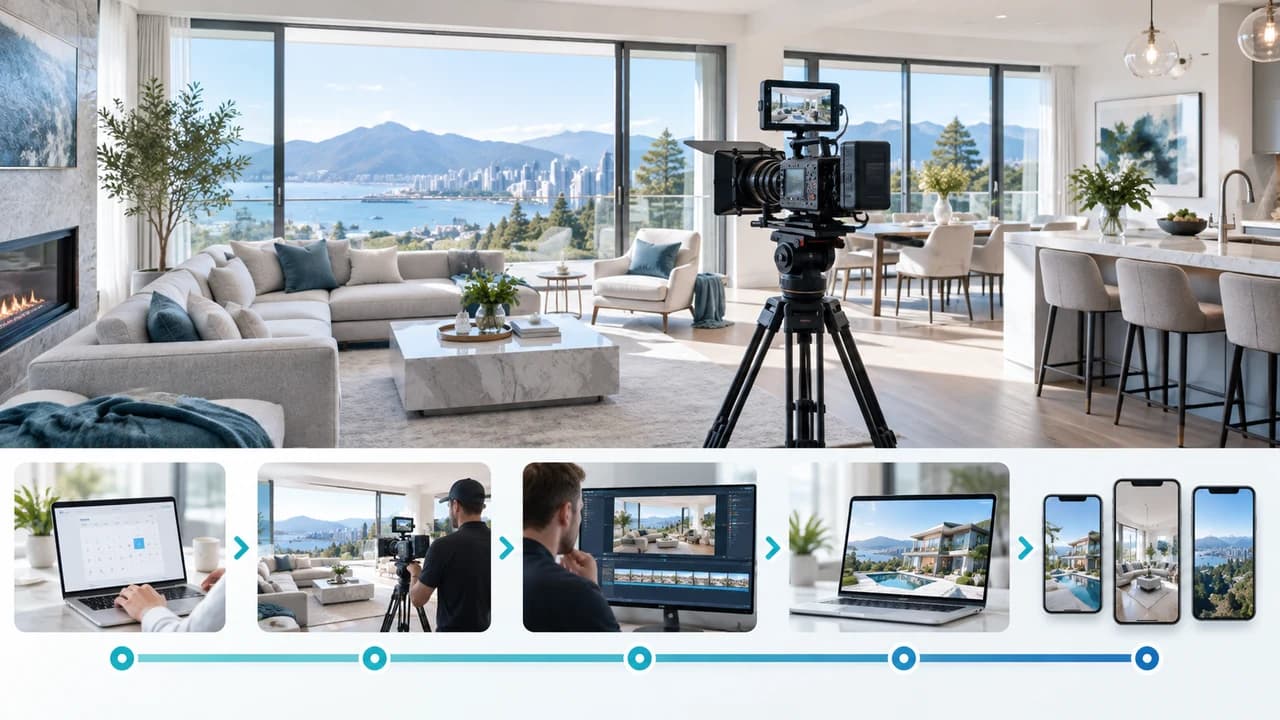
Real estate video Vancouver turnaround depends on scope, access, weather, review, and required delivery versions.
What determines a real estate video Vancouver turnaround
Real estate video Vancouver turnaround starts before a camera enters the property. The schedule depends on what is being filmed, whether the home is ready, who can provide access, which deliverables are required, and how quickly one authorized person can review the first proof. A compact listing video captured at one prepared property is a different production from a package involving drone footage, twilight coverage, an agent introduction, multiple neighbourhood locations, and several social versions. Asking only how many days editing takes leaves out the decisions that usually control the launch date.
Begin with the intended listing date and work backward. Confirm the address, property type, approximate size, occupancy status, parking or loading constraints, preferred filming window, and any building rules that affect access. Then define the output: a main property film, an MLS-compatible version if needed, vertical cutdowns, agent-led clips, or aerial coverage. The production team should also know where each file will be published because platform and brokerage requirements can change music, branding, duration, captions, and export choices.
A practical timeline is conditional rather than a universal promise. Weather can affect exterior light and drone operations; occupants can delay room preparation; late feature requests can change the edit; and unclear approval ownership can add days without adding quality. The fastest route is a complete brief and a prepared home. Steven Video Production's Vancouver real estate video service can scope the sequence around the actual property and launch plan. If you have an address and target listing date, contact us with those details before assuming a delivery window.
Booking: build the timeline backward from the listing launch
The booking stage should turn a desired launch date into a sequence with decision points. Start by separating the date the listing must go live from the date the media must be ready. The agent, brokerage, photographer, videographer, stager, cleaner, owner, and property manager may all need different lead times. A condominium may require elevator booking or concierge coordination, while an occupied home may have narrow access windows. When those constraints are disclosed early, filming can be scheduled around them instead of discovered at the door.
The creative brief can be short, but it should be specific. Identify the likely buyer, the property's strongest three to five features, the intended tone, required on-camera participation, and the channels where the video will appear. Share a floor plan, current listing draft, brand assets, and reference links when available. References are useful for pace and mood, but they should not become a promise to reproduce a different property's architecture, weather, or lighting. The shot plan must follow the home that actually exists.
This is also the time to confirm scope boundaries. Decide whether exterior and neighbourhood footage are essential, whether drone coverage is requested and feasible, whether the agent needs scripted or conversational pieces to camera, and how many formats belong in the quote. The real estate media pricing guide explains common scope variables without replacing a property-specific estimate. Once the deliverables, access, and review contact are defined, the team can propose a realistic filming slot and delivery sequence. A vague booking may look fast on a calendar, but it often creates the slowest post-production because unanswered questions return after filming.
Before shoot day: property readiness, access, and weather checks
A prepared property protects both visual quality and turnaround. Cleaning and staging should be complete before the crew arrives, not happening room by room during filming. Remove personal items, visible bins, cleaning supplies, loose cables, pet equipment, and anything that distracts from the intended buyer experience. Turn on working practical lights, replace failed bulbs, open blinds consistently, and identify features that need demonstration. The videographer can refine composition, but production time should not be consumed by decisions that belong to property preparation.
Access deserves its own confirmation. Provide the correct unit number, entry instructions, parking details, lockbox or concierge process, alarm information, and the name of the person available if access fails. For strata properties, verify any restrictions on common-area filming. If residents, tenants, contractors, or cleaners will be present, set a clear handoff time. Quiet, unobstructed rooms allow smoother camera movement and cleaner natural sound when ambience is being recorded.
Exterior plans should remain flexible until conditions are known. Rain, wind, smoke, harsh contrast, traffic, construction, and seasonal light can all affect the value of an exterior shot. Drone footage adds location, safety, airspace, and weather considerations; requesting it does not guarantee that a flight will be appropriate on the booked day. Review the Vancouver drone videography planning service when aerial footage matters to the campaign. A useful backup plan identifies ground-based exterior angles and interior priorities that can still be captured if aerial work is not feasible. Confirming these choices before shoot day prevents a weather change from turning into an undefined delay.
Shoot day: capture the listing once for multiple delivery formats
Shoot day should follow the agreed priorities while leaving room for what the camera reveals on site. A typical sequence begins with a walkthrough to confirm readiness, lighting, reflections, view directions, and any differences from the brief. The videographer can then organize rooms to reduce repeated setup changes and capture the property in a coherent visual path. The goal is not simply to collect attractive clips; it is to create enough connected coverage for the viewer to understand layout, flow, scale, and distinguishing features.
If horizontal and vertical deliverables are both required, they need to be considered during capture. Cropping a finished widescreen video into a vertical frame may remove important architecture or turn smooth movement into an awkward composition. Some shots can serve both formats, while others benefit from a separate position or movement. The same planning applies to an agent introduction: placement, eyeline, clean audio, background activity, and alternate short takes can make later cutdowns much more useful.
Unexpected conditions should be documented and resolved quickly. A room may be unavailable, a view may be obscured, or a feature described in the brief may not be ready. The agent or designated contact should be reachable to approve a substitute rather than leaving the editor to guess later. Before leaving, the crew should check that priority rooms, exteriors, details, agent segments, and requested supplementary footage have been covered. This disciplined closeout is one of the best protections against a return visit. It also preserves the planned turnaround because the editor receives a complete, intentional set of material rather than a collection with unresolved gaps.
Post-production: first proof, revision, and MLS-safe delivery
Post-production is a sequence, not a single export. The editor first organizes and reviews the footage, selects usable takes, builds the visual route through the property, balances pacing, and establishes colour and sound. Music, titles, agent branding, property details, and any licensed assets must match the approved scope. A first proof is meant to test the complete story and identify factual or preference changes; it is not necessarily the final file for public upload.
The most efficient review is consolidated. One decision-maker should gather comments from the agent, seller, brokerage, or marketing team and return one time-coded list. Notes such as shorten the kitchen sequence at 00:24 or replace the exterior title with the approved address are actionable. Separate rounds of overlapping comments, new creative directions after approval, or factual details supplied late can extend the schedule. Before review begins, confirm spelling, address format, brokerage marks, agent contact information, and any claims shown on screen.
Final delivery should be tied to destinations, not described only as a high-resolution file. The website or social master may include branding and music, while an MLS-oriented version may need different treatment under the applicable board, brokerage, or platform rules. Those requirements can change, so the agent should provide the current specifications rather than relying on assumptions. Vertical social cutdowns also need their own framing, opening, captions, and safe areas. After approval, archive the agreed masters with clear filenames and verify playback. The listing can then launch with files that were prepared for their actual channels rather than one generic export being forced everywhere.
How to keep a listing video on schedule without sacrificing quality
Fast delivery comes from reducing uncertainty, not from skipping essential work. Send a complete brief, approve the scope before filming, prepare the property fully, keep one review owner available, and provide channel specifications early. If the listing date is immovable, identify which deliverable must be ready first. The main listing film might take priority, with vertical cutdowns following in an agreed sequence. Staging delivery this way can protect the launch without pretending every version has the same production path.
Build contingency into any plan that depends on weather, aerial work, talent, or multiple locations. A backup filming window may be valuable for a premium exterior, but it also affects availability and cost. Alternatively, the campaign can proceed with strong interiors and ground-based exteriors while aerial coverage is removed or rescheduled. The correct choice depends on whether the aerial view is central evidence for the property or simply an enhancement. Make that distinction during booking rather than on the morning of production.
Finally, avoid announcing a public launch time until the required reviewers have accepted the proof. Uploading, platform processing, brokerage checks, and last-minute metadata are outside the camera shoot itself but still belong in the operational timeline. A reliable real estate video Vancouver turnaround therefore includes booking, readiness, capture, editorial review, revisions, channel-specific exports, and final publishing checks. For a schedule based on your property rather than a generic promise, send Steven Video Production the address, target launch, access constraints, and deliverable list. That information is enough to start a useful production conversation and identify the risks before they become delays.
Frequently Asked Questions
How long does real estate video take to deliver in Vancouver?
There is no universal turnaround. Property readiness, scope, drone or weather dependencies, number of versions, and review speed all affect delivery. Share the target listing date and deliverables before booking so the production team can confirm a realistic sequence.
When should I book a real estate video before the listing goes live?
Book early enough to allow property preparation, access coordination, filming, a first proof, consolidated revisions, and channel-specific exports. Work backward from when the approved media must be ready, not only from the public listing date.
Can MLS and social media use the same real estate video file?
Not always. MLS, brokerage, website, and social channels may have different branding, music, duration, framing, caption, or export requirements. Confirm current destination specifications and request separate versions when needed.
Does rain delay a Vancouver real estate video shoot?
It depends on the shot list and property. Interiors may proceed while exterior or drone coverage changes, but the best choice depends on how important the view and exterior light are to the listing story. Agree on a backup plan before shoot day.
What causes delays after a real estate video is filmed?
Common causes include late property facts or branding, comments from multiple reviewers, new deliverables, conflicting revision notes, and waiting for destination specifications. One authorized reviewer and a consolidated time-coded note list keep approval moving.
Ready to start your project?
Get in touch for a free consultation. I typically respond within a few hours.