
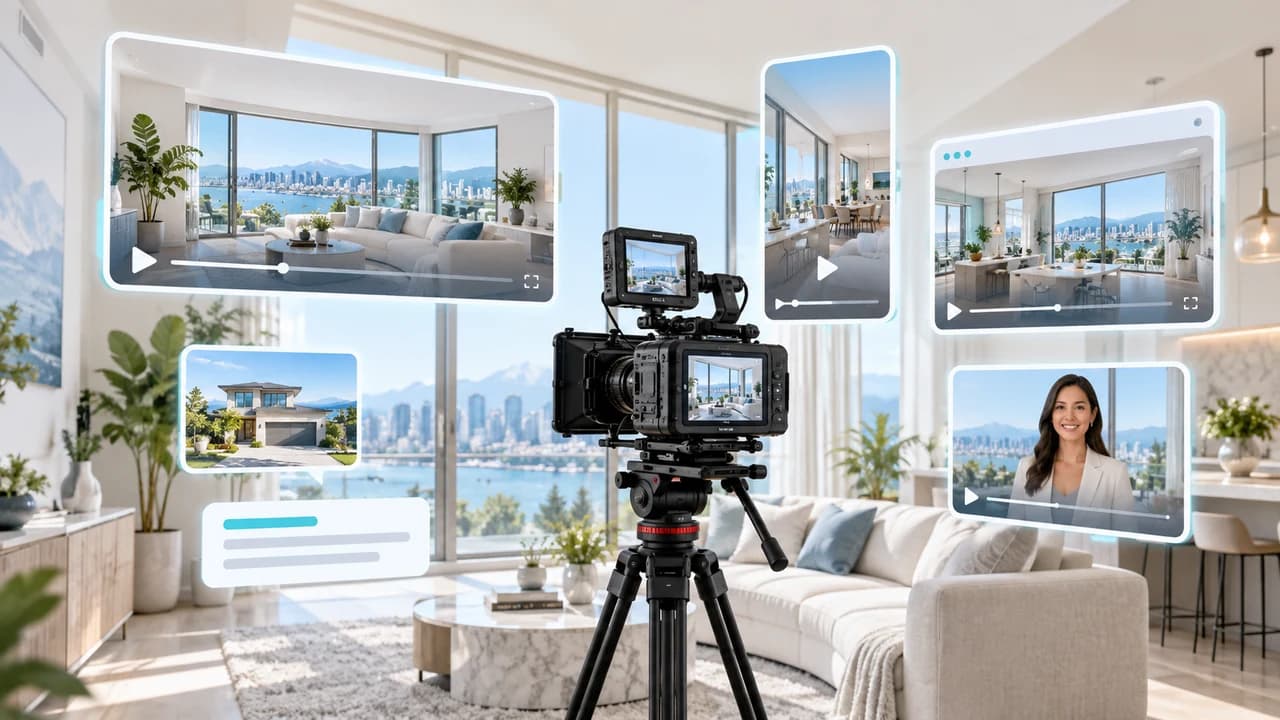
Real estate video Vancouver deliverables explained: plan listing masters, Reels and branded versions.
Define real estate video Vancouver deliverables before defining one video
Real estate video Vancouver deliverables should be planned as a publishing system, not described vaguely as one property video. A polished 16:9 listing film may be the centre of the package, but it cannot automatically perform every job on an agent website, a vertical social feed, an email campaign and a property presentation. Each placement has its own viewing behaviour, crop, opening pace, branding needs and technical handoff. When those destinations are identified before the shoot, the camera operator and editor can protect the compositions, dialogue and details needed for each useful version.
Start by writing down the actual campaign path. Where will a buyer first encounter the property? Where should an interested viewer go next? Which version is meant to introduce the listing, and which one is meant to deepen interest? A vertical teaser may earn attention in a feed, while a longer horizontal master can explain flow, finishes and outdoor context. The agent website may need a clean player image and a concise description. An email or presentation may need a short, fast-loading link rather than a large attachment. These are connected assets, but they are not interchangeable files.
The property itself also shapes the list. A compact condo may benefit from a direct, efficient sequence and one strong view reveal. A large family home may need more time to explain room relationships, levels and outdoor areas. A distinctive agent-led listing may need an introduction and closing recorded on camera. Agree on the story first, then select the versions that serve it. Do not request every possible format merely because it exists. Each additional cut requires editorial decisions, review and quality control.
Before requesting a quote, send the property type, address or area, planned listing date, principal selling features, spokesperson availability and intended channels. Review the current Vancouver real estate video service, compare options on the real estate media pricing page, and use the written contact form to describe the deliverable list you will actually publish. That gives the production team enough information to scope a coherent campaign instead of guessing what one video means.
Use a 16:9 listing master to explain the property clearly
The horizontal listing master is usually the most complete expression of the property story. A 16:9 frame works naturally for website players, YouTube-style viewing, televisions and presentation screens, and it gives wide rooms and exterior relationships enough visual space. Its job is not simply to be the longest version. It should help a qualified viewer understand arrival, layout, major features, atmosphere and location context in an intentional order. Every shot should add information or emotion rather than repeat an angle already established.
A strong master often opens with the clearest reason to keep watching: a distinctive exterior, a view, a designed interior relationship or a concise agent line. It can then move through the home in a route that viewers can follow. Wide establishing shots explain rooms; medium and detail shots reveal materials and practical features; exterior or neighbourhood context can close the visual argument when it is accurate and available. Music, natural sound, agent narration or a mixture can support that structure, but the chosen approach should be agreed before production because it changes what must be recorded.
Keep a clean distinction between the creative master and any platform-specific copy. An MLS system, brokerage website or syndication partner may apply its own current upload, branding, link, duration or file requirements. Those rules can vary and change, so the article does not invent a universal MLS specification. The agent or brokerage should confirm the requirements that apply to the intended destination. The production scope can then include a compatible export or hosting link if agreed, rather than assuming the creative master can be uploaded everywhere unchanged.
Ask what the horizontal delivery includes: the final resolution and codec, music treatment, captions if needed, a branded or unbranded version, hosting responsibility, review rounds and any alternate opening or ending. A master should also be reviewed for factual accuracy. Room labels, address graphics, agent details, amenity claims and neighbourhood references need an authorized check before publication. A beautiful edit is not complete if a buyer cannot tell what belongs to the property or if an outdated contact detail appears on screen.
Design vertical Reels and teasers as real edits, not automatic crops
A vertical Reel or Short is not merely the horizontal master turned sideways. The 9:16 frame changes where subjects fit, how quickly a shot communicates and how titles or captions can avoid interface overlays. A wide glide through an open-plan room may lose the kitchen or view when centre-cropped. An agent standing at one edge of a 16:9 composition may disappear entirely. If vertical distribution matters, the shot list should include portrait-safe angles or dedicated vertical takes rather than relying on an editor to rescue every widescreen frame later.
The opening also needs different logic. A viewer who deliberately opens a listing page has already shown interest; a social viewer is moving through a feed. A short vertical version should establish the property or its strongest feature immediately, then provide just enough progression to earn a click, message or profile visit. That may mean a view reveal, an unusually designed room, a concise agent hook or a clear sequence from exterior to hero interior. It should not compress every room into a frantic montage. A teaser creates curiosity; it does not replace the complete property story.
Decide whether the social deliverable needs burned-in captions, a clean version, an agent handle, a property address, a call to action or room for platform-native stickers and copy. A clean file can be more flexible for future reuse, while a captioned file improves comprehension when sound is off. If both are useful, list both. Also identify whether music will be embedded by the editor or added inside the publishing platform. Licensing and reuse can differ between a delivered master, an organic social post and paid advertising, so intended use should be declared rather than assumed.
A practical package may include one primary Reel plus a shorter teaser, but more versions are not automatically more valuable. The best choice depends on the campaign schedule and the agent's capacity to post. Review examples in the real estate video portfolio, then specify the destinations, duration range, orientation and CTA for each requested cut. This turns vertical production into a deliberate deliverable instead of an afterthought created from whatever pixels remain after cropping.
Plan agent introductions, branding and clean versions for reuse
Agent branding can make a property film more useful, but it should be scoped with the intended audience and reuse plan. An on-camera introduction can establish local knowledge, identify the listing and give viewers a human reason to continue. A closing can direct interested buyers to a showing, website or contact point. These segments require time for message approval, microphone placement, performance coaching and enough takes to sound natural. They should not be added on the driveway at the end of the shoot without a prepared line and a decision about where they will appear.
Branding can also include name and title graphics, brokerage information, a logo supplied in the correct format, brand colours and approved contact details. Confirm who approves these elements and whether any mandatory brokerage wording applies. The editor should receive current assets rather than downloading an old logo from the web. Keep factual property information separate from promotional language, and verify names, phone numbers, URLs and titles character by character before export. Small graphic errors are highly visible once a video is distributed.
A clean version removes some or all agent-specific graphics, spoken calls to action or end cards so the property footage can serve another approved destination. An unbranded file is not automatically required by every channel, and clean does not always mean the same thing: it may mean no logo, no agent appearance, no contact details, no text, or simply no final end card. Define the term in writing. If a brokerage, seller or partner needs a different version, list exactly what changes instead of requesting an undefined unbranded edit.
Think about ownership and shelf life as well. A property-specific film usually has a short active listing period, while selected agent-introduction footage or community material may support longer-term branding if the agreement and content permit it. Do not assume that music, stock assets, drone material, project files or every recorded clip can be reused indefinitely in paid campaigns. State the planned organic, website, email and advertising uses before production. Clear usage intent allows the quote and licence choices to match the campaign rather than leaving the issue until after delivery.
Include thumbnails, stills, captions, review ownership and archive handoff
The files around the video often determine whether the campaign can launch smoothly. A thumbnail or cover image should remain legible at small size and represent a real selling feature. It may come from a high-quality video frame, a separately captured still or the photography set. If a portrait Reel cover is needed, its crop should be planned so the subject remains visible behind platform interface elements. Do not assume that any random frame from a moving shot will be sharp enough or composed well enough to serve as the public cover.
Captions also need a scope. An agent introduction or voice-over may require an accurate transcript, burned-in social captions, a separate caption file, or translated versions. Names, addresses, neighbourhood terms and property features must be checked by someone who knows the listing. Automated transcription can speed up a draft, but it does not remove the need for human correction. A clean version without captions may be useful for future language adaptations, while a captioned version is ready for silent viewing. List both only when there is a real publishing need.
Name one review owner before the first cut. That person should consolidate seller, agent, brokerage and marketing feedback into one time-coded list. Conflicting notes from several reviewers can add delay and produce revisions that undo one another. The scope should define what the first cut is expected to contain, how many feedback rounds are included, what counts as a correction and what becomes a new deliverable. Changing a phone number is different from rebuilding the story around a newly requested agent segment.
Finally, clarify handoff and archive expectations. Ask how files will be named and delivered, how long the download remains available, whether approved masters are archived, and whether source footage or editable project files are included. Raw footage can be large, ungraded and difficult to interpret; it is a separate handoff decision, not an automatic bonus. Keep your own organized copy of final approved exports, thumbnails, captions and usage notes. A simple delivery index prevents the horizontal master, Reel, clean file and captioned file from becoming an unlabeled folder no one can confidently publish.
Build the smallest complete multi-channel deliverable list
The most useful deliverable list is not the largest one. It is the smallest set that supports the real campaign without forcing the team to rebuild assets after launch. Begin with the horizontal property story if a complete website or presentation film is needed. Add a dedicated vertical cut when social discovery is part of the plan. Add agent-led, clean, captioned or alternate-language versions only when an identified channel or stakeholder requires them. Then attach the supporting items that make publication possible: thumbnail, captions, approved naming and a clear download index.
A concise brief can be written as a checklist. For every version, state its purpose, audience, destination, orientation, approximate duration, branding, spoken content, caption treatment, music approach, CTA, reviewer and deadline. Mark which elements are essential and which are options. Confirm the property features that must appear and the claims that require approval. Identify weather-dependent or access-dependent footage, including exterior, amenity, twilight or drone coverage, so a fallback does not become a surprise on editing day.
Then compare the list with the budget. If the campaign cannot support every version, preserve the assets that serve distinct buyer stages rather than several nearly identical edits. One complete master and one purpose-built Reel may do more work than five minor duration changes. If an agent introduction will not be rehearsed or approved, a concise voice-over or text-light property edit may be more reliable. If a brokerage requires a specific export, confirm it before the quote. Good scoping removes files that have no owner or publishing date.
Real estate video Vancouver deliverables should make the listing easier to understand, the agent easier to recognize and the campaign easier to publish. They should not be a menu of technical formats detached from strategy. To request a project-specific scope, send Steven Video Production the property details, intended channels, target launch date and preferred deliverables through the contact page. The result can then be quoted, filmed, reviewed and handed off as one connected system, with each version doing a defined job.
Frequently Asked Questions
What real estate video deliverables should a Vancouver listing include?
A practical starting set is a 16:9 listing master, one purpose-built vertical Reel when social distribution is planned, and the thumbnail or caption files needed to publish them. Add agent-branded, clean or alternate versions only for identified channels.
Can the same real estate video be used for MLS, a website and Instagram?
The same footage may support all three, but one unchanged file rarely serves them equally well. Confirm current MLS or brokerage requirements, use a horizontal master for complete viewing, and create a portrait-safe vertical edit for social feeds.
Should a real estate video include an agent introduction?
Include one when the agent's presence supports the campaign and there is time to approve the message and record it well. It is not mandatory for every property; a property-led edit may be stronger when the agent segment has no clear purpose.
Do I need branded and unbranded real estate video versions?
Only when specific destinations require different treatments. Define what unbranded or clean means in writing, because it could refer to logos, agent appearances, contact details, text overlays or end cards.
Are captions, thumbnails and raw footage included with real estate video?
Do not assume they are included. Captions, cover images, stills and raw-footage handoff each require preparation and should be listed in the quote. Confirm formats, review responsibility, delivery method and archive period.
How much do multiple real estate video versions cost?
Cost depends on shoot planning, dedicated orientations, agent recording, edit differences, captions, graphics, music usage, review rounds and exports. Request a base deliverable set plus separately priced options instead of comparing only the number of files.
Ready to start your project?
Get in touch for a free consultation. I typically respond within a few hours.