
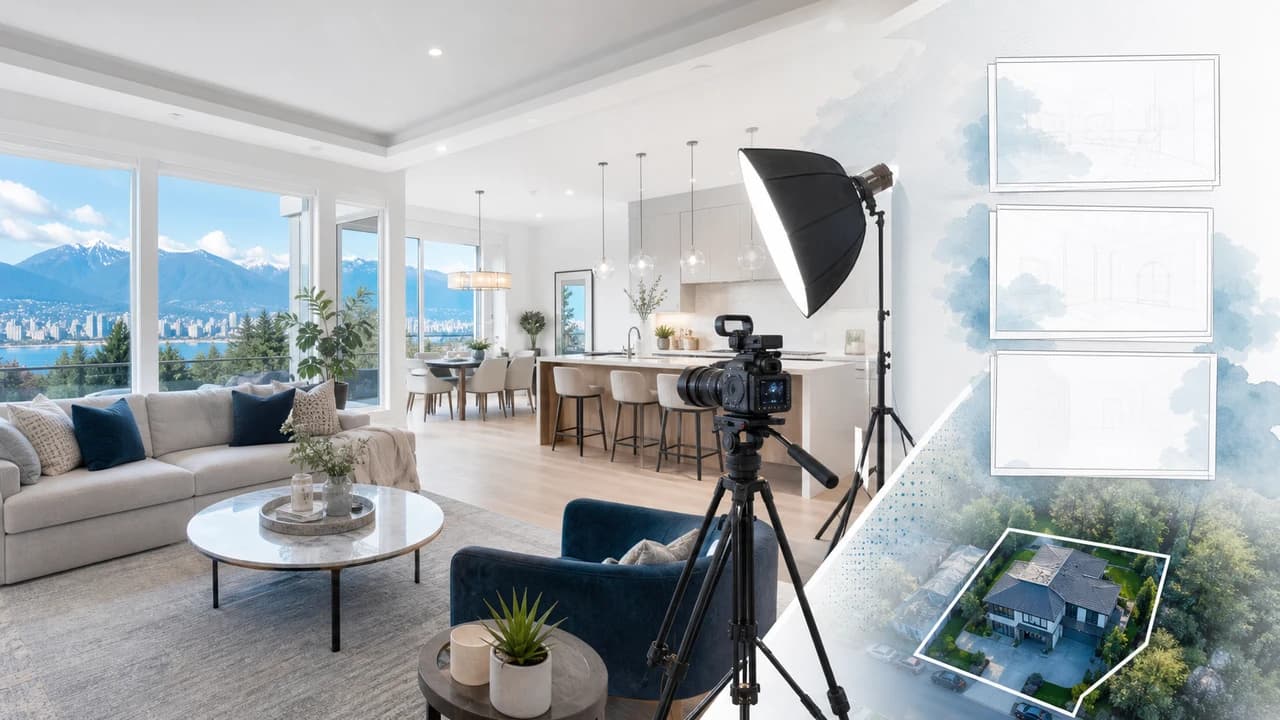
Prepare a property for real estate video Vancouver with a clear listing-day plan for staging, access, sound, and footage.
Prepare a property for real estate video Vancouver by planning for the viewer
Prepare a property for real estate video Vancouver by deciding what a buyer should understand in the first few seconds. Is the main advantage daylight, a family-friendly layout, walkability, a renovated kitchen, water or mountain context, or the relationship between indoor and outdoor space? That decision gives the shoot a story rather than a random tour of rooms. Share the listing details, priority features, likely buyer, desired launch date, and every version you need before the filming day.
A strong listing video is not a substitute for accurate listing information. It is a visual introduction that helps a viewer feel the flow, scale, light, and location context. Give the production team a simple priority list: essential rooms, features that must be shown honestly, and areas that can be skipped if time or conditions change.
For help turning that list into coverage and deliverables, review real estate video services in Richmond. A clear brief protects the scenes that matter most and leaves room for natural details that make a home feel lived in rather than over-styled.
Stage for the camera, not only for an open house
Camera framing notices small distractions that are easy to miss while walking through a home. Before the crew arrives, remove personal photos, bins, pet items, charging cables, refrigerator magnets, cleaning products, loose paperwork, and mismatched small appliances. Clear counters and bedside tables, but do not make every surface empty. A few intentional objects, fresh towels, a simple table setting, and restrained greenery can give a room warmth without competing with the property.
Open blinds and curtains where privacy allows, replace burnt-out bulbs, and switch off ceiling fans before recording. Match light colour where possible; mixed orange and blue lighting can make a room look less inviting on camera. Check mirrors, glass, and glossy countertops from more than one angle. They can reveal clutter or people outside the intended frame.
Staging should still be truthful. Do not use props to imply a view, feature, or level of finish that the property does not offer. If a room has an awkward shape, ask the videographer which angle best explains it. Thoughtful preparation helps the team focus on movement, composition, and a natural buyer journey rather than spending the first hour moving objects.
Make access, people, and sound part of the schedule
A smooth filming day depends on access as much as visual preparation. Confirm keys or lockbox arrangements, parking, elevator bookings, building rules, loading access, and any concierge or strata requirements before the call time. Tell the team which spaces cannot be filmed and whether neighbours, tenants, children, pets, cleaners, or contractors may be present. A short access note prevents delays and avoids filming a detail that should stay private.
Plan a quiet window for any agent introduction or on-camera remarks. Turn off televisions, loud appliances, fans, and notification sounds; close windows if traffic, construction, or lawn equipment dominates the audio. If the home is occupied, designate a comfortable place for residents and pets to wait while individual rooms are filmed. Pets should be safely out of frame unless they are intentionally part of an approved lifestyle moment.
A professional Vancouver real estate video team can adapt to a real home, but practical information early helps them use the booked time on useful footage. The goal is not a silent, sterile house; it is enough control to capture clean visuals and any spoken material clearly.
Use weather and aerial footage as a planned option
In Vancouver, weather can change the mood of a listing quickly. Discuss the preferred visual feeling before the date: soft daylight, a bright exterior, a twilight atmosphere, or coverage that must work despite rain. The crew can plan priorities around the forecast, but it is wise to identify an exterior backup window rather than assume every shot will be possible at one exact time. Keep exterior paths tidy, move visible bins when permitted, and make sure gates, decks, and outdoor seating are safe and ready to show.
Aerial footage can establish proximity, lot context, a waterfront setting, or the scale of a development. It does not automatically improve every listing, and it should never replace the ground-level material that shows how a home actually feels. Site-specific conditions, airspace, weather, safety, and the story determine whether it is useful.
Discuss aerial ideas with a Vancouver drone videography provider early, especially for a property with limited access or a tight launch schedule. A grounded plan gives the audience context while keeping the interior, key features, and practical buyer questions at the centre of the film.
Plan the delivery before filming starts
A listing rarely needs one file only. Decide in advance whether you need a primary horizontal video for a website or listing presentation, vertical clips for social platforms, short teaser edits, captions, an agent introduction, or a version without spoken audio. Distribution affects shot selection. A vertical edit needs intentional close-ups and space for captions; a longer film needs transitions and coverage that can carry a buyer through the property without repetition.
Prepare brand assets, agent name spelling, brokerage requirements, approved talking points, and any disclosure language in one folder. Choose one person to consolidate feedback after the first edit, and agree on the deadline for notes. This keeps revisions focused on clarity, accuracy, and the needs of the audience instead of producing conflicting requests.
If you are preparing a new listing campaign, contact Steven Video Production with the address context you may share publicly, property highlights, access details, target launch date, and required formats. The best preparation does not make a real property look artificial; it gives the crew time to show its genuine advantages clearly and efficiently.
Frequently Asked Questions
How do I prepare a property for real estate video in Vancouver?
Set the buyer story and priority rooms first, then declutter, stage honestly, confirm access, control avoidable noise, and share the required delivery formats before filming.
Should I stage a home differently for video than for photos?
The basics overlap, but video shows movement and more angles. Check reflections, cords, light colour, room flow, and anything that may enter the frame as the camera moves.
Can a real estate video shoot happen when it rains?
Many interior shots can proceed. Discuss exterior priorities and a backup window in advance because weather affects the visual mood, exterior access, and aerial feasibility.
Is drone footage necessary for a Vancouver property listing?
Not always. It can add useful location or scale context when conditions allow, but it should support—not replace—clear interior and ground-level footage.
What should I send my real estate videographer before the shoot?
Send property highlights, target buyer, access and building notes, priority rooms, launch date, agent details, brand assets, and the video versions you need.
Ready to start your project?
Get in touch for a free consultation. I typically respond within a few hours.