
AI workflow automation for video creators is the 2026 productivity edge most videographers haven't tapped yet. This guide shows how to use n8n and the Claude API to automate client intake, project status updates, and delivery notifications — saving 10–15 hours per week without writing a single line of code. Practical templates for corporate video, real estate, and event videographers included.
AI workflow automation for video creators is the competitive edge that now separates videographers who scale from those who stay perpetually overbooked and underselling. While the AI video conversation in 2026 centres on generation tools like Seedance and Kling, the real time sink for working videographers isn't editing — it's client email, follow-up sequences, project status updates, and delivery logistics that pile up between shoots. Tools like n8n and the Claude API make it possible to automate exactly those workflows without touching code. For videographers handling corporate video in Vancouver, real estate shoots in Richmond, or event coverage across the Lower Mainland, a single well-built automation stack can realistically reclaim 10–15 hours every week.
What Is n8n and Why It's Right for Video Workflows
n8n is an open-source workflow automation platform — think Zapier or Make.com, but with two key differences that matter for videographers. First, n8n lets you run AI processing steps (like Claude API calls) directly inside a workflow node, so you can extract meaning from a client's free-text inquiry, classify project types, and generate personalised responses — all in one flow. Second, the self-hosted version is free with unlimited workflows, and the cloud version starts at $20/month with no per-operation fees. For a solo videographer running 300 automations a month, that's $0.07/automation vs. Zapier's task-based pricing which can hit $50–150/month at the same volume.
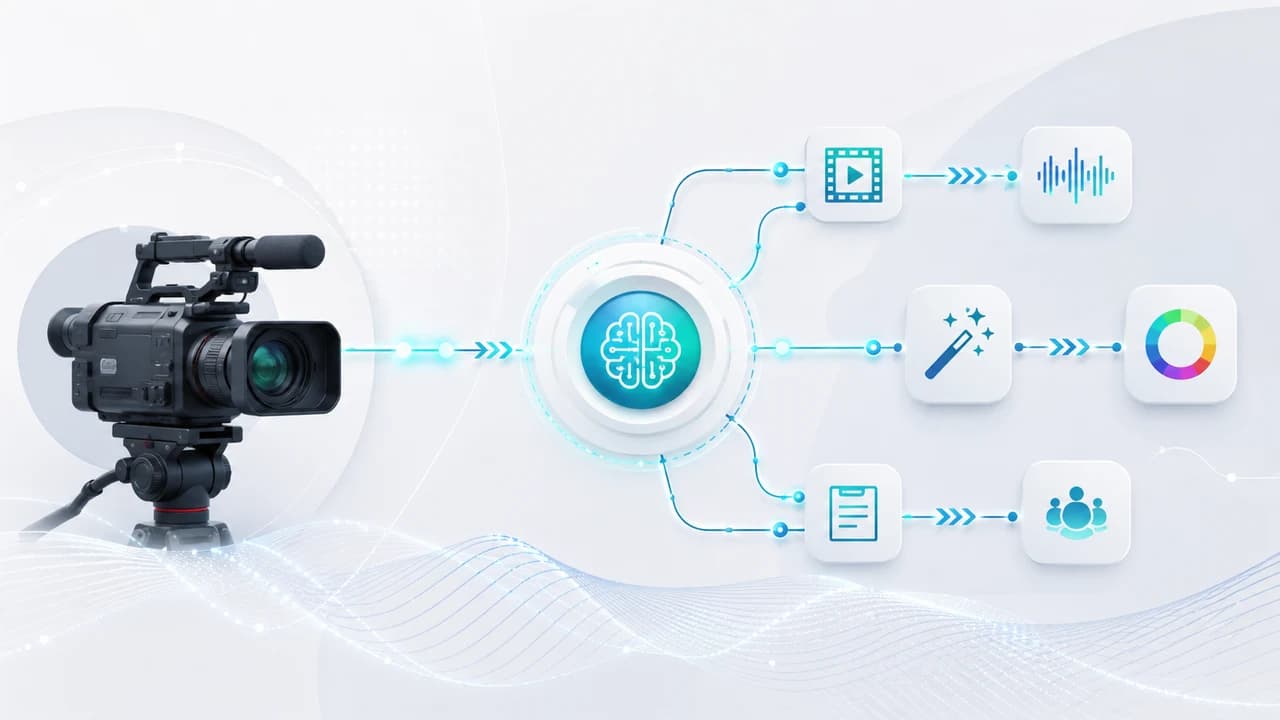
n8n uses a visual node-based interface: each block is a step (Gmail, Google Calendar, Claude API, Notion, Stripe), and you connect them with arrows. No coding required for 90% of video business workflows. Setup takes one afternoon. The return on that investment is measured in hours per week, not weeks per year.
The Claude API Layer: What AI Actually Does in Your Workflow
The reason to add Claude API to an n8n workflow — rather than just using rigid form fields — is natural language understanding. Clients don't fill out forms the way developers design them. They write 'I need a video for my restaurant opening next Saturday in Burnaby, budget around $1,200, something modern and upbeat.' A traditional form misses half that. Claude extracts it perfectly: event type, location, date, budget, tone preference.
In a client intake workflow, the Claude node sits between the form submission trigger and the calendar-check node. It receives the raw inquiry text, extracts structured data (project type, date, location, budget range, urgency), and passes clean values downstream. The rest of the workflow then branches on those values: available dates get a booking link, unavailable dates get alternative suggestions, under-budget inquiries get a friendly scope-adjustment reply.
Cost for a solo videographer: at Claude's current API rates, processing 150 client inquiries per month costs roughly $1.50–$3 total. For most video businesses, that's a rounding error compared to the admin time saved.
Three Workflow Templates for Different Video Services
Corporate Video — Project Status Automation: After you wrap a shoot and deliver the rough cut, the follow-up cycle begins. Set up an n8n workflow triggered by a Notion or Airtable status change. When a project moves to 'Rough Cut Delivered', it automatically sends a personalised check-in email at 48 hours, a revision reminder at 5 days, and a final deadline notice at 10 days — all with the client's name, project title, and a direct link to their review folder. For corporate video clients in Vancouver, this level of proactive communication is often what generates referrals.
Real Estate Video — Urgent Request Triage: Real estate videography in Richmond runs on same-day and next-day urgency. Build a workflow that watches your Gmail for keywords like 'urgent', 'ASAP', 'today', or 'tomorrow', extracts the property address and shoot date via Claude, and sends you an immediate Slack or SMS notification with pre-parsed details. You can accept or decline in under 60 seconds, before the inquiry gets buried.
Event Coverage — Automated Delivery Notification: When you move finished event files into a shared Google Drive or Dropbox folder, n8n detects the upload, generates a personalised delivery email with the client's name and a direct link, and sends it automatically. No copy-pasting, no forgetting to follow up the night of delivery.
Real Costs, Real Limitations
n8n workflows break when upstream APIs change their response format — Gmail, Google Calendar, and Notion each update occasionally, and a field rename can stop a workflow cold. Budget 30–60 minutes per month on workflow maintenance once everything is running. Your first build will take 2–4 hours to get stable; after that, additions are faster.
Claude API can misclassify unusual inquiry types — a client using sarcasm, very short messages, or non-standard English may get an unexpected route. Build a 'fallback' branch that flags uncertain classifications for manual review rather than sending an automated reply you haven't proofread.
Most importantly: automation doesn't replace judgment. Complex client relationships, unusual project scopes, and high-value event videography bookings still benefit from a human conversation first. The right use of automation is eliminating the repeatable, low-judgment tasks — so you have more mental bandwidth for the interactions that actually determine whether you win the project.
Getting Started: A 60-Day Build Plan
Week 1: Sign up for n8n Cloud (free trial, then $20/month). Get your Anthropic API key (Claude API) with a $5 credit — more than enough to test. Build workflow #1: contact form → Claude extraction → Gmail reply. Test with 10 simulated inquiries.
Week 2–3: Run the intake automation live. Monitor for edge cases. Add the urgent-request triage if you do real estate or event work.
Week 4–8: Add the project status update sequence. Then the delivery notification. Most videographers who commit to this process have 3–5 reliable automations running by day 60, saving a conservative 8–12 hours of admin per month.
That's time you can redirect toward building your portfolio, improving your pitches, or simply shooting more. AI automation for video creators isn't about replacing the craft — it's about making sure the business side of the craft doesn't consume the creative side.
Frequently Asked Questions
What is n8n and is it free?
n8n is an open-source workflow automation platform (similar to Zapier or Make.com). The self-hosted version is completely free with unlimited workflows. The cloud-hosted version starts at $20/month with no per-operation fees, making it significantly cheaper than Zapier for high-volume video business workflows.
Do I need coding skills to use n8n for my video business?
No. n8n has a visual drag-and-drop interface where each step is a 'node' you connect with arrows. Standard video business workflows — client intake, project status emails, delivery notifications — require no code. You may need basic JavaScript for very custom logic, but most videographers never touch it.
How much does the Claude API cost for a solo videographer?
Very little. Processing 150 client inquiries per month through Claude API costs approximately $1.50–$3 at current rates. A $5 API credit is more than enough for initial testing. For most video businesses, the monthly API cost is under $5 — a tiny fraction of the admin time saved.
What's the best AI automation for real estate video businesses?
The highest-impact automation for real estate videographers is urgent request triage — a workflow that watches your inbox for same-day or next-day shoot requests, extracts the property address and date using Claude API, and sends you an immediate SMS or Slack alert. Real estate moves fast; a 20-minute response advantage over competitors wins bookings.
Can I use Make.com or Zapier instead of n8n?
Yes. Make.com (formerly Integromat) supports Claude API integration and has a generous free tier. Zapier works but charges per task, which gets expensive at volume. n8n is the best choice if you want maximum flexibility and lowest long-term cost. Make.com is a good middle ground if you prefer a more polished UI over n8n's steeper initial learning curve.
Will AI automation replace the need to hire a video production assistant?
Not entirely. AI automation handles repetitive, rule-based admin tasks well. But it doesn't replace the judgment calls a production assistant makes — managing difficult clients, coordinating complex shoots, problem-solving on location. Think of n8n + Claude as handling your inbox while you're on set, not as a full replacement for human support.
Ready to start your project?
Get in touch for a free consultation. I typically respond within a few hours.