
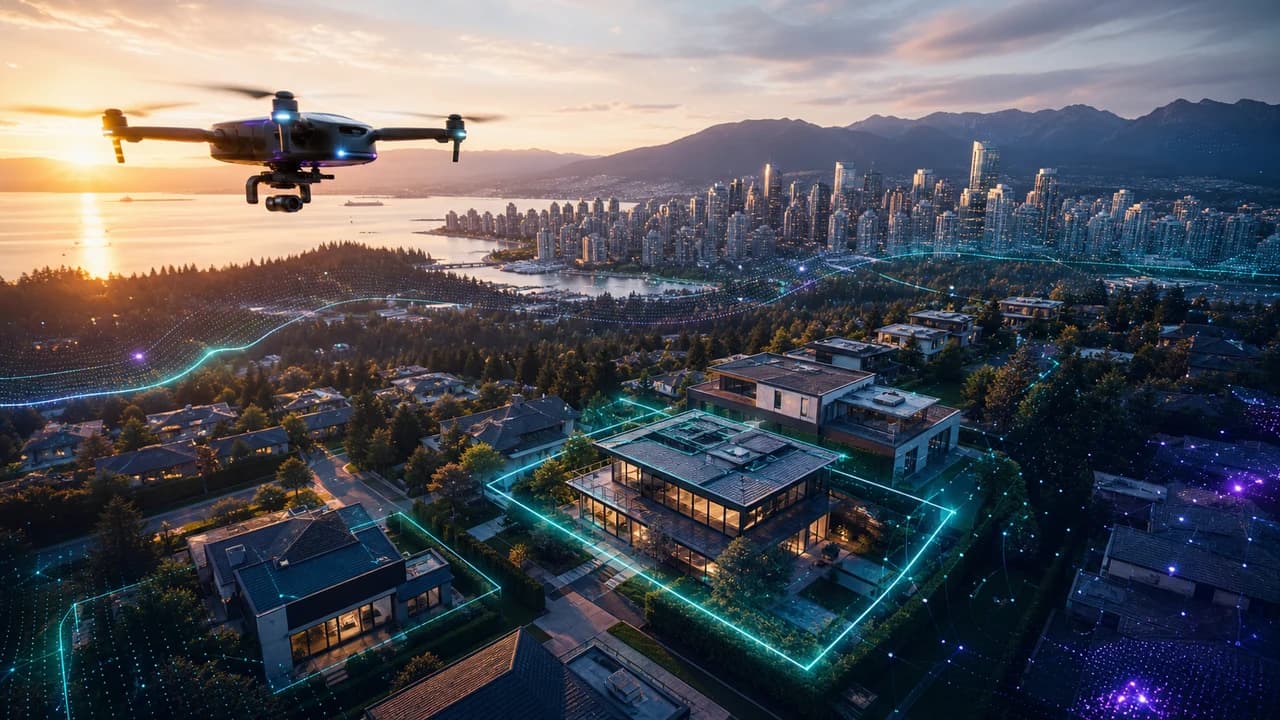
Drone video for real estate listings Vancouver: what realtors need to know about airspace regulations, weather planning, MLS deliverables, social media formats, and 2026 pricing for Greater Vancouver properties.
Why Drone Video Sells Vancouver Real Estate Faster
In Vancouver's competitive real estate market, listings with professional drone video receive up to 68% more inquiries than those with photos alone, according to MLS data analyzed by real estate marketing platforms. Properties marketed with aerial video sell 32% faster on average. Vancouver's unique geography — where ocean, mountains, and urban skyline converge — makes aerial footage not just a nice-to-have but a decisive competitive advantage. A well-shot drone video shows potential buyers the property's relationship to its surroundings: proximity to the seawall, mountain views, transit accessibility, and neighborhood context — all in a single sweeping sequence that ground-level photography simply cannot capture. For luxury homes in West Vancouver, waterfront properties in Kitsilano, or condos with panoramic views in Coal Harbour, aerial footage transforms square footage into lifestyle storytelling. Our drone videography services cover the entire Greater Vancouver area, from downtown high-rises to sprawling Richmond estates. Whether you're listing a single-family home, a commercial property, or a development site, drone video gives your MLS listing the visual edge that today's buyers expect.
Vancouver Drone Regulations: Airspace, Permits, and TFZ Awareness
Flying a drone for commercial real estate photography in Vancouver requires understanding Transport Canada regulations and local airspace restrictions. Any drone used for commercial purposes — including real estate marketing — requires the pilot to hold at minimum a Basic RPAS (Remotely Piloted Aircraft System) certificate from Transport Canada. For operations within controlled airspace, near people, or in built-up urban areas, an Advanced RPAS certificate is mandatory. Vancouver presents unique challenges: much of the downtown core and areas near Vancouver International Airport (YVR) fall within controlled airspace (Class C), which means flights require NAV Canada authorization via an RPAS Flight Authorization request. Specific no-fly zones include YVR approach paths, the Harbour Flight Centre area, and heliport zones at VGH and BC Children's Hospital. Additionally, provincial and municipal parks — including Stanley Park — often have their own drone restrictions. A professional Greater Vancouver drone videographer handles all regulatory compliance: checking NOTAMs (Notices to Airmen) on the day of the shoot, filing flight plans where required, carrying liability insurance, and ensuring every flight operates within Transport Canada's guidelines for altitude (maximum 122m/400ft AGL), visual line of sight, and distance from bystanders. Attempting to film real estate aerials without proper certification can result in fines from $1,000 to $15,000.
Weather Planning: Best Seasons and Times for Greater Vancouver Drone Shoots
Vancouver averages 165 rainy days per year, making weather planning the single most important operational factor for real estate drone videography. The best months for guaranteed clear shoots are June through September, when Greater Vancouver typically experiences extended dry stretches and consistent golden hour lighting. May and early October can also work well but require flexible scheduling with backup dates. The 'golden hour' — the 60-90 minutes after sunrise or before sunset — produces the most cinematic footage in Vancouver because the low-angle light catches the water, mountains, and glass buildings simultaneously. Overcast days, while less dramatic, can actually be advantageous for certain properties: even diffused light eliminates harsh shadows on building facades and makes interior-to-exterior transitions in video seamless. Wind is the real dealbreaker: Transport Canada regulations and manufacturer guidelines typically limit drone flights to sustained winds below 30 km/h, with gusts under 40 km/h. Coastal properties in West Vancouver and Richmond are particularly susceptible to afternoon onshore winds — morning shoots are usually safer. Cold temperatures (below 0°C) reduce drone battery life by 30-40%, which matters for winter listing shoots in North and West Vancouver. A professional drone videographer monitors multiple weather models starting 48 hours before the shoot, and always has a weather backup window built into the schedule to avoid last-minute cancellations.
MLS vs Social Media Deliverables: Format, Length, and Style
Different platforms demand different video formats, and understanding these distinctions ensures your drone footage works hard across every marketing channel. For MLS (Multiple Listing Service) and platforms like realtor.ca: the standard deliverable is a horizontal (16:9) video, typically 1-3 minutes long, hosted on YouTube or Vimeo and embedded into the listing. MLS-compliant videos should focus on the property itself — smooth, steady aerial establishing shots, a systematic tour of exterior features, lot boundaries from altitude, and neighborhood context. Most MLS platforms do not allow contact information, watermarks, or agent branding within the video itself. For social media — particularly Instagram Reels, TikTok, and YouTube Shorts — the format shifts dramatically: vertical orientation (9:16), 15-60 seconds, with faster pacing, text overlays, and music. Social-first videos work best when they emphasize the most dramatic visual moments: the aerial reveal shot, the infinity pool against the ocean, the rooftop terrace with mountain backdrop. For YouTube (standard format), a 2-5 minute property tour combining drone and ground footage performs best for search-driven discovery. Our real estate video services in Richmond and Vancouver deliver a complete content package: one MLS-ready horizontal edit, one social-optimized vertical edit, and raw aerial clips for agents who want to create their own content. This multi-format approach maximizes ROI by extending the same shoot across every channel where buyers look.
What Realtors Should Budget: Drone Video Pricing Factors in Greater Vancouver
Drone video pricing for Vancouver real estate varies based on multiple factors, and understanding these line items helps agents budget accurately and communicate value to sellers. A standard single-property aerial video package in Greater Vancouver typically ranges from $350 to $800, which includes 1-2 hours on location, full 4K aerial footage of exterior and surrounding area, a 1-2 minute edited highlight video, and delivery within 48-72 hours. Add-ons that affect pricing include: twilight or dusk shoots (adds 20-30% for scheduling complexity and specialized lighting), interior ground videography to complement the aerials (typically $200-400 for a full walkthrough), 360-degree panoramic aerial photos for virtual tours ($100-200 per property), rush delivery within 24 hours (adds 25-50%), and multiple-property packages where several listings are filmed in one day (volume discounts of 15-25% typically apply for 3+ properties). Travel to more distant areas — White Rock, Squamish, or eastern Fraser Valley — may add a mileage surcharge. Properties with complex airspace requirements (within YVR controlled zones, near heliports) require additional pre-flight coordination time, which some providers fold into their rate and others bill separately. For a complete discussion of pricing by location and service type, visit our services page. Investing in professional drone video almost always pays for itself: properties marketed with aerial content typically command 2-5% higher sale prices, according to industry data.
How to Prepare a Property for Drone Photography and Video
A little preparation before the drone shoot can dramatically improve the final results. Start with the exterior: remove all vehicles from the driveway and street frontage where possible — cars, RVs, and boats in frame distract from the architecture. Clear garbage bins, recycling containers, garden hoses, and children's toys from visible areas. If the property has a pool, ensure the water is clean and the cover is removed. Trim overhanging branches that might obscure key architectural features from an aerial angle. Mow the lawn 1-2 days before the shoot, and if possible, schedule the shoot shortly after landscaping maintenance. For the best aerial results, identify the property's orientation: south-facing properties look best in morning light, while west-facing homes and those with mountain views shine during the golden hour before sunset. Provide the videographer with advance notice of any specific features you want highlighted — the rooftop deck, the lot boundary advantage, the proximity to a park or school, or the mountain and water sightlines. If the property is occupied, notify residents and neighbors about the drone flight to avoid concerns and ensure windows and blinds are opened or closed consistently across the facade. Finally, have a clear weather backup plan: identify 2-3 potential shoot windows in your listing timeline so the videographer can select the best conditions. These simple steps typically take 30 minutes of preparation and can mean the difference between an average MLS listing and one that stops buyers mid-scroll.
How to Get a Quote for Your Vancouver Real Estate Drone Video
Getting an accurate quote for your real estate drone video project in Vancouver is straightforward when you provide the right information upfront. Send your videographer: the property address and type (single-family, condo, townhouse, commercial, development land), the approximate square footage or lot size, and the key features you want highlighted — mountain views, waterfront access, architectural details, neighborhood amenities. Specify your required deliverables: do you need a full MLS-ready video, social media cutdowns, 360-degree photos, raw footage, or a combined aerial-and-ground package? Share your listing timeline — when does the property go live, and how much lead time do you have? If you have a budget range, mention it early so the videographer can recommend the right package tier. For drone shoots within controlled airspace near YVR, the West End, or downtown Vancouver, let the videographer know the location so they can factor in any additional regulatory coordination time. At Steven Video Production, we provide same-day quotes for real estate drone projects across the entire Lower Mainland. Our team holds Advanced RPAS certification, carries full commercial liability insurance, and has experience filming properties from Richmond farmland estates to West Vancouver oceanfront homes. Text your project details to (236) 838-4889 or email stevenkhe@gmail.com, and you will receive a detailed quote within one business day.
Frequently Asked Questions
Do I need a special license to fly a drone for real estate in Vancouver?
Yes. Any commercial drone operation in Canada — including real estate photography — requires the pilot to hold a valid RPAS certificate from Transport Canada. For most Vancouver real estate shoots, an Advanced RPAS certificate is needed because the flights occur in urban areas and sometimes within controlled airspace near YVR. Professional drone videographers carry these certifications, along with commercial liability insurance and NAV Canada flight authorizations. You as the real estate agent or homeowner do not need a license — the hired videographer handles all regulatory compliance.
How much does drone video for real estate cost in Greater Vancouver?
A standard single-property aerial video package typically costs $350 to $800, including on-site filming, a 1-2 minute edited highlight video, and 48-72 hour delivery. Full aerial-and-ground packages combining drone footage with interior walkthrough videography range from $600 to $1,500 depending on property size and deliverables. Factors that increase cost include: twilight shoots, rush delivery, 360-degree photos, and properties within controlled airspace requiring additional flight authorization work.
Can drone video be used on MLS (Multiple Listing Service) listings?
Yes. Most MLS platforms, including realtor.ca, support embedded video from YouTube or Vimeo. The key requirement is that the video must focus on the property and cannot contain agent branding, contact information, or watermarks. A properly formatted MLS drone video — typically horizontal 16:9, 1-3 minutes, without text overlays or logos — is fully compliant with MLS rules and has been shown to increase listing views by 40-60%.
What happens if it rains on the day of my drone shoot?
Professional drone videographers in Vancouver always build weather contingency into their schedules. Most will monitor weather models starting 48 hours before the shoot and will proactively reschedule if rain or high winds are forecast. It is standard practice to schedule 2-3 potential shoot dates within your listing timeline to ensure you get optimal conditions. Drones cannot fly in rain — water damages sensitive electronics — and most operator insurance policies require flights to stay outside of precipitation. Your videographer should communicate weather decisions at least 24 hours in advance.
How long does it take to receive drone video deliverables?
Standard turnaround for a real estate drone video is 48-72 hours from the shoot date. This covers editing, color grading, music selection, and export to the formats you need (MLS-ready horizontal, social media vertical, and raw clips). Rush delivery within 24 hours is available from most providers for an additional 25-50% surcharge. For agents managing multiple listings, many videographers offer ongoing retainer relationships with faster standard turnaround times and priority scheduling.
Can you film multiple properties in one drone session?
Yes, and it is one of the most cost-effective ways to use drone video for real estate. Multi-property sessions are common for agents with several active listings or brokerages doing batch content days. Most providers offer volume discounts of 15-25% when filming 3 or more properties in a single day, and the travel efficiency reduces per-property cost. Properties should be within a reasonable geographic radius — typically 30 minutes driving distance between locations — to maximize shooting time.
Ready to start your project?
Get in touch for a free consultation. I typically respond within a few hours.