
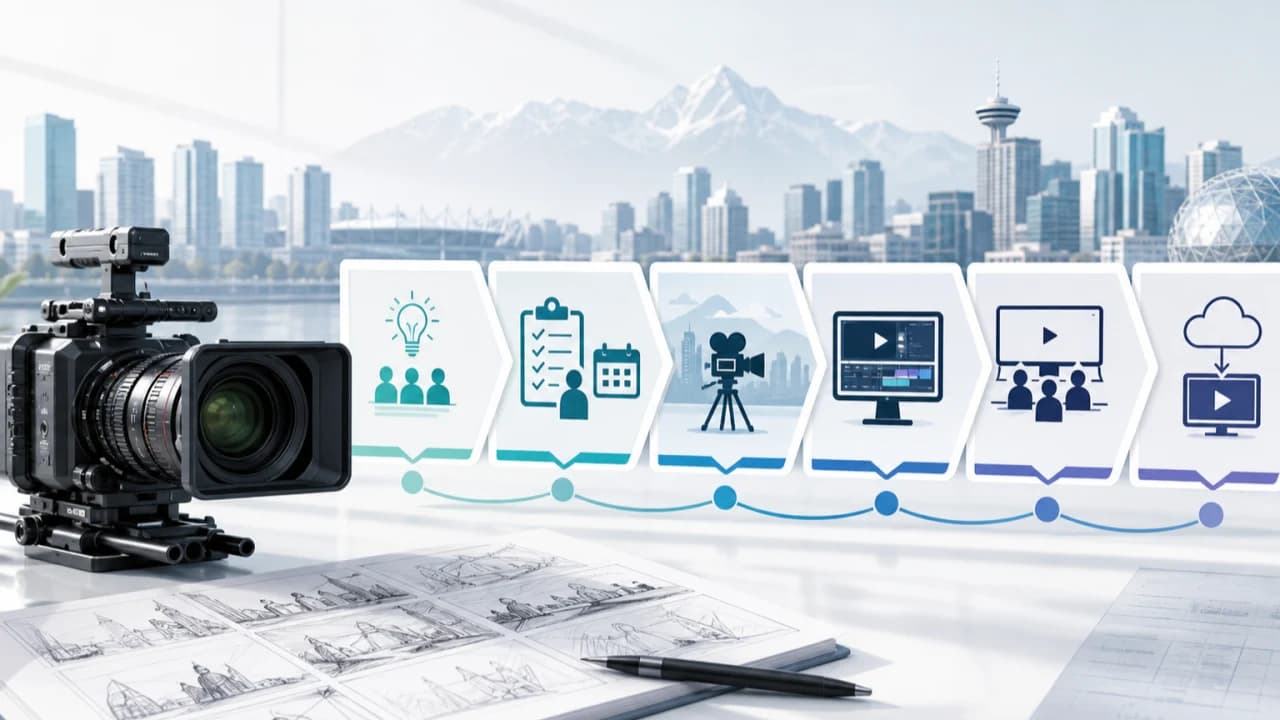
Corporate video production Vancouver timelines become predictable when the brief, shoot plan, review rounds, and delivery formats are defined early.
Corporate video production Vancouver timeline: begin with the real decision
A corporate video production Vancouver timeline is not simply shoot day plus editing. It begins when a business decides what viewers should understand, feel, or do after watching. A recruitment film, founder story, customer testimonial, internal training piece, and product launch all use cameras differently, so the first useful step is a short discovery conversation and a written brief.
Define the audience, one primary message, channels, desired launch date, locations, people who need approval, and the versions you actually expect to use. A two-minute website film may also need 30-second social cutdowns, captions, vertical crops, or a bilingual version. Those choices affect the schedule before a camera is unpacked.
For a Vancouver business, a practical brief also identifies access windows, office noise, available daylight, parking, brand rules, and whether an interview subject needs coaching. Corporate video production in Vancouver works best when these constraints are discussed early rather than discovered during the shoot. The goal is not a longer process; it is fewer avoidable decisions at the expensive stages.
Pre-production turns a goal into a shootable plan
After the brief is approved, pre-production converts the business objective into a clear production plan. This usually includes a creative outline, interview questions or script guidance, a shot list, location plan, schedule, crew and equipment decisions, and a list of client-provided assets such as logos, product screens, old footage, or brand fonts. A simple corporate interview can move quickly. A multi-location story with staff, customers, demonstrations, or animation needs more coordination.
The most common timeline risk is waiting for every detail to be perfect. Instead, confirm the decisions that control the shoot first: the message, featured people, locations, availability, deliverables, and approval owner. Then refine the supporting details. For office shoots, reserve a quiet room, arrange a realistic working area for b-roll, and tell participants what to wear and when to arrive.
If aerial footage or an exterior establishing sequence is genuinely useful, it needs its own planning window. Vancouver drone videography should be scoped around the story, site, access, weather, and safe operations—not added as a generic last-minute visual effect. A good pre-production plan gives the shoot day purpose and protects post-production time.
Shoot day: capture the story, not just a checklist
On shoot day, the team follows the agreed plan while making room for real moments. A typical corporate setup starts with lighting and sound checks before the key interview. Clean audio is often the foundation of the edit: viewers will forgive a modest office background more readily than distracting echo, traffic, or unclear dialogue. Interview direction should help people speak naturally in complete thoughts, rather than forcing memorized lines.
B-roll then gives the editor visual evidence for those ideas: teams collaborating, products in use, a client interaction, a process, a workspace, or the Vancouver setting that makes the business recognizable. Build in realistic transitions between locations and leave a small buffer for a late participant, an occupied boardroom, or a weather change. Rushing every minute may look efficient but can remove the coverage that makes the final story flexible.
Before wrapping, review essential interview answers, brand-sensitive details, and must-have shots with the client contact. This is the right time to identify a missing screen recording or alternate product angle. A planned shoot can often create multiple useful assets in one session; see our video production services when you need a main film plus cutdowns rather than a one-use deliverable.
Editing and review: agree on feedback before the first cut
Post-production begins with footage organization, selects, audio cleanup, and an editorial structure. The first cut should answer the question established in the brief, not attempt to display every frame recorded. Depending on the project, the edit may include colour correction, music licensed for the intended channels, graphics, captions, motion elements, and versions for different aspect ratios.
A realistic timeline depends heavily on feedback. Choose one person to consolidate comments, agree on the number of review rounds, and set a response window before editing begins. Scattered feedback from five stakeholders often creates contradictory notes and delays that no editor can solve alone. Helpful feedback describes the viewer problem: an opening feels too slow, a claim needs proof, a section is unclear, or a call to action is missing. Timestamped notes are far more actionable than a request to make it better.
AI tools can speed transcription, logging, caption drafts, and some repetitive post-production tasks, but they do not replace editorial judgment, fact checking, brand review, or permission to use a person’s image. A strong corporate video timeline protects these human decisions rather than hiding them behind a fast export button.
Final delivery and a launch plan that keeps the work useful
Final delivery is more than sending one video link. Confirm the master format, social versions, captions, thumbnail needs, file naming, usage context, and archive plan. A horizontal website film, a LinkedIn cutdown, a vertical reel, and a subtitled version may share footage but require different editing choices. Planning them together is usually more efficient than returning months later to rebuild the project from the master.
Before launch, check names, titles, on-screen claims, logos, music permissions, captions, links, and the destination for the call to action. If the video is meant to generate enquiries, make the next step visible on the page and in the post copy. A portfolio clip that looks polished but has no clear path to a service or contact point cannot do its full business job.
The best next step is a short scope call with a target launch date, audience, examples, and a list of expected deliverables. Contact Steven Video Production to plan a corporate video timeline around your actual business calendar. The earlier the core decisions are made, the more calmly the team can move from brief to a final delivery you can keep using.
Frequently Asked Questions
How long does corporate video production take in Vancouver?
The schedule depends on scope, locations, availability, review rounds, and deliverables. A focused project can move quickly once the brief is approved; multi-location or multi-version productions need more pre-production and review time.
What should I prepare before a corporate video production call?
Bring your target audience, primary message, launch date, locations, examples you like, people who may appear, required platforms, and the person who can approve creative decisions.
How many feedback rounds should a corporate video include?
Agree on a defined number before editing starts. Consolidated, timestamped feedback from one client contact keeps revisions focused and prevents conflicting stakeholder notes.
Can one corporate shoot create social media versions?
Yes. If vertical crops, short cutdowns, captions, and channel-specific calls to action are planned in the brief, one shoot can capture coverage for multiple final assets.
When should I book a corporate videographer in Vancouver?
Book once you know the business goal, approximate launch window, key participants, and locations. More lead time is useful when several stakeholders, locations, or specialized footage are involved.
Ready to start your project?
Get in touch for a free consultation. I typically respond within a few hours.