
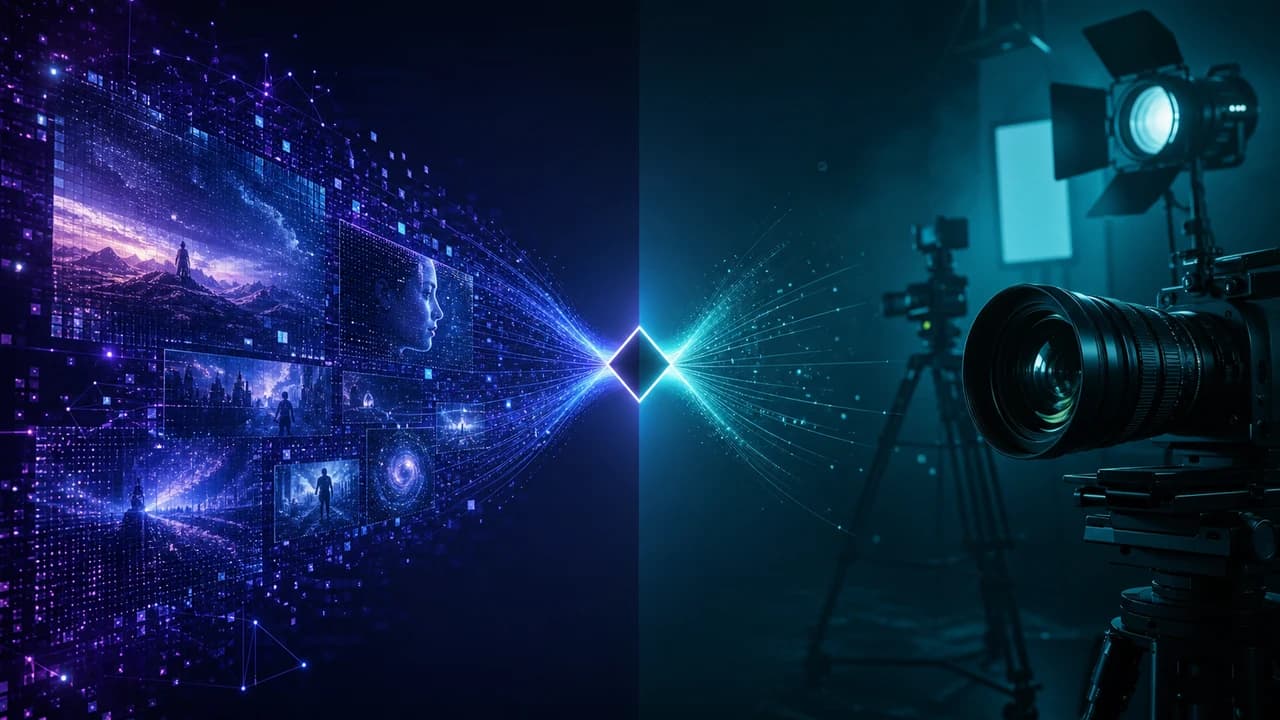
AI video vs real videographer: a 2026 guide comparing cost, quality, and turnaround to help Vancouver businesses choose.
The Question Has Changed
By mid-2026, AI video generators like Sora 2, Seedance 2.0, Kling 3.0, and Veo 3.1 can produce clips that look genuinely impressive in a social feed. For the first time, a marketing manager can generate a ten-second product teaser without booking a shoot. That capability has reframed a question we hear every week from Vancouver business owners: should I use AI video, or hire a real videographer?
The honest answer is that they solve fundamentally different problems. AI video excels at volume, speed, and creative experimentation. A professional videographer excels at capturing real people, real places, and the authentic moments that build trust with a specific audience. The decision rarely comes down to cost alone — it comes down to what you are trying to achieve and who needs to believe it.
If you are a local business trying to win clients in the Lower Mainland, the bar is higher than looking cool. Google's own guidance on helpful content, reinforced by VP Liz Reid in June 2026, emphasizes that content demonstrating genuine first-hand experience outperforms generic material — including in AI-powered search results. That principle applies to video too. A drone shot of a real Richmond listing at golden hour, or genuine audience reactions at a corporate event in downtown Vancouver, carries credibility that AI-generated footage simply cannot replicate.
This guide walks through where each approach wins, where it falls short, and how most local businesses end up blending both for maximum impact.
What AI Video Does Well in 2026
Today's AI video tools are genuinely powerful for certain jobs, and pretending otherwise does not serve you. Here is where they shine:
Rapid concept visualization. Need to show a client three storyboard directions before committing to a full shoot? AI video can generate stylized mood clips in minutes, helping stakeholders align on creative direction without the cost of a test shoot. This is genuinely useful for corporate video production in Vancouver projects where getting buy-in from multiple stakeholders is half the battle.
Social media volume. If your brand posts daily across TikTok, Instagram Reels, and YouTube Shorts, AI tools can produce the steady stream of short-form content needed to maintain visibility. A single product shot can become a dozen variations with different motion, text overlays, and aspect ratios.
Stock-replacement b-roll. Instead of licensing generic stock footage that everyone has already seen, you can generate custom visuals that match your brand palette and scene description. This is especially useful for explainer videos where you need abstract or metaphorical visuals.
Low-stakes experimentation. Testing a new campaign concept? AI video lets you iterate quickly and cheaply before investing in full production. If a concept does not land, you have lost minutes, not thousands of dollars.
The common thread is that AI video shines when the footage does not need to be real, specific, or trustworthy — it just needs to look good and fill space. For top-of-funnel awareness content, that is often enough.
Where AI Video Still Falls Short
Despite the hype, AI video has hard limits that matter enormously for business use. Understanding these boundaries is the difference between a smart strategy and an expensive mistake:
It cannot capture real people and real moments. A testimonial from an actual client, a CEO keynote, a product launch event — these require being physically present with a camera. AI can simulate a face, but a discerning viewer can tell, and more importantly, the trust evaporates the moment it feels synthetic. For B2B and professional services, that trust is everything.
Audio quality remains a weakness. Professional videographers capture clean, isolated audio — lapel mics on speakers, dedicated room tone recording, ambient sound design. AI-generated audio has improved but cannot record your client saying their own words in their own voice with genuine emotion. Bad audio ruins good video faster than anything else.
Local specificity is absent. AI video cannot generate recognizable Vancouver landmarks, specific neighborhoods, or the particular quality of light on a waterfront property in Richmond. When your audience lives here, they notice when a Vancouver video looks like it could be filmed anywhere. Real estate video production depends on showing the actual property and surroundings — there is no AI shortcut.
Brand consistency at scale is difficult. Generating one good clip is easy. Generating twenty clips that share the same visual language, color grade, and motion style across a campaign is genuinely hard. Professional production maintains that consistency from first frame to final deliverable.
Physical logic breaks down. AI video struggles with hands interacting with objects, text rendered on screens, and architectural details. For product demos or property tours, these errors undermine credibility the instant a viewer spots them.
When a Real Videographer Is the Only Option
Certain projects simply require professional production — not because AI is bad, but because the goal demands authenticity that only real footage provides:
Real estate listings. A property video needs to show the actual home, the actual layout, and the actual neighborhood. Buyers are making the largest purchase of their lives, and they need to trust what they see. Licensed drone videography in Vancouver adds aerial context — lot size, surrounding streets, proximity to schools and transit — that no AI tool can fabricate for a specific address.
Corporate events and conferences. Keynotes, panel discussions, award ceremonies, networking moments — these happen once and cannot be recreated. A professional event videographer captures clean multi-camera coverage and isolated audio that becomes an asset you can repurpose for years.
Client testimonials and case studies. The single most powerful marketing asset is a real customer talking about their real experience with your company. No AI tool can manufacture that authenticity, and increasingly, audiences are trained to spot deepfakes and synthetic endorsements.
Brand films and company stories. When you need to convey culture, values, and personality, you need real footage of real people in your actual workspace. A brand film shot at your office in Burnaby or your studio in Vancouver tells a story that AI-generated scenes cannot.
Any project where trust is the deliverable. If your audience needs to believe what they are watching — and for most Vancouver B2B, real estate, and professional service clients, they absolutely do — professional production is not optional. It is the foundation.
The Hybrid Approach Most Businesses Actually Use
The most effective 2026 strategy is not AI versus professional. It is both, deployed strategically at different stages of production. Here is the model we see working best for Vancouver businesses:
AI for pre-production. Generate storyboard concepts, mood boards, and reference clips to align your team before the shoot day. This saves billable hours and ensures everyone — client, creative director, videographer — shares the same vision before anyone picks up a camera.
Professional production for the hero footage. The core of your video — the interviews, the product demonstrations, the event coverage, the property walkthroughs — should always be captured professionally. This is your credibility layer, the footage that makes viewers trust you.
AI for b-roll enrichment and variations. Fill visual gaps with AI-generated abstract or metaphorical footage that complements your professional clips. Then generate multiple social media cutdowns from your professional footage, each optimized for a different platform and aspect ratio.
AI for post-production efficiency. Tools like AI-powered transcription, auto-captioning in multiple languages, and rough-cut assembly can dramatically speed up editing without sacrificing the quality of your final deliverable. For businesses serving both English and Mandarin-speaking clients, bilingual video production benefits enormously from AI-assisted translation workflows.
The pattern is clear: professional footage provides the trust anchor, and AI tools provide the volume and speed. You are not choosing between them — you are building a system that uses each for what it does best.
Cost and Timeline at a Glance
Here is a practical comparison for typical Vancouver projects, based on 2026 market rates:
AI video generation alone: Twenty to one hundred dollars per month for a tool subscription. Turnaround is minutes per clip. Best for social media volume, concept testing, and abstract b-roll. The limitation is absolute: it cannot capture real people, places, or events, and every clip carries a risk of subtle visual errors that undermine professional credibility.
Professional videographer (half-day shoot): Typically twelve hundred to twenty-five hundred dollars for filming, plus editing and post-production. Turnaround is three to ten days depending on scope. This includes professional cinema cameras and lenses, audio recording equipment, a licensed drone pilot if aerial work is needed, color grading, and deliverables in multiple formats. Best for events, testimonials, real estate, corporate branding — anything where authenticity matters.
Hybrid project: A professional shoot for hero content — roughly fifteen hundred to thirty-five hundred dollars depending on complexity — combined with an AI tool subscription at twenty to fifty dollars per month for variations and social cutdowns. This is the sweet spot for most businesses. You get the credibility of professional footage and the volume that social platforms demand.
The key insight that many businesses miss: AI video is cheap per clip but expensive in wasted effort if those clips do not serve your business goal. A hundred AI-generated clips that look generic and build no trust are worth less than one professional video that directly influences a client decision. For high-value transactions like real estate, a single professional listing video can influence a sale worth hundreds of thousands or millions of dollars — a return on investment that no AI tool can match.
A Simple Decision Framework
Before you commit budget, ask yourself these five questions:
1. Does the video need to show something real? If the answer is yes — a specific property, a live event, an actual person — hire a videographer. There is no AI alternative that works for this use case, and pretending otherwise will cost you credibility.
2. Is trust the primary goal of this content? If your audience needs to believe what they are seeing in order to take action — booking a consultation, scheduling a viewing, signing a contract — professional footage is mandatory. AI video works for awareness but actively undermines trust the moment a viewer senses it is synthetic.
3. How much content volume do you actually need? If you need daily social posts across multiple platforms, combine a quarterly professional shoot with AI tools for daily output. If you need one flagship brand video, invest the full budget in professional production.
4. What is the lifespan of this asset? A social media post has a functional lifespan of roughly forty-eight hours. A brand film, a real estate listing video, or a corporate profile works for months or even years. Allocate your professional budget to long-lifespan assets that compound in value.
5. Does local specificity matter to your audience? If your viewers are in Vancouver, they want to recognize Vancouver. AI cannot generate your specific city skyline, your actual office building, or the real neighborhood where your listing sits. A licensed drone pilot capturing your property from the air at golden hour is worth more than any AI-generated landscape.
If you answered yes to questions one, two, or five, you need a professional videographer — full stop. If your priorities are volume and experimentation for short-lived content, AI tools are your most efficient option. Most successful Vancouver businesses need both, and that hybrid model is where the best results consistently live. Ready to discuss your project? Explore our full range of video services or reach out directly for a quote tailored to your specific needs.
Frequently Asked Questions
Is AI video cheaper than hiring a videographer?
Per clip, yes — AI video subscriptions cost twenty to one hundred dollars per month. But cost per clip is the wrong metric. If those clips do not build trust or drive decisions, they waste your time and attention budget. Professional video costs more upfront but produces assets that convert viewers into clients, especially for real estate and B2B services where the transaction value is high.
Can AI video replace a professional videographer entirely?
Not for any project that requires real people, real places, or authentic trust. AI video cannot capture a live event, record a client testimonial, or show an actual property. It excels at concept visualization, social media volume, and abstract b-roll. For everything else — events, real estate, corporate branding, testimonials — a professional videographer remains essential.
When should I definitely hire a real videographer instead of using AI?
Hire a professional whenever the video needs to show something real and specific: a property listing, a corporate event, a client testimonial, a brand film shot at your actual location, or any content where audience trust is the primary goal. If a viewer needs to believe what they are seeing, professional footage is non-negotiable.
How do I combine AI video tools with professional production?
The most effective hybrid approach uses AI for pre-production storyboards and mood clips, professional production for all hero footage including interviews and event coverage, and AI tools again in post-production for generating social media variations, auto-captioning, and translation. This gives you the credibility of professional footage plus the volume that social platforms demand.
What does a professional videographer cost in Vancouver in 2026?
A half-day professional shoot typically ranges from twelve hundred to twenty-five hundred dollars including filming and basic editing. Full-day shoots with multiple cameras, drone work, or same-week delivery run higher. Most Vancouver businesses find that one or two professional shoots per quarter, combined with AI tools for daily social content, delivers the best balance of quality and output.
Can AI video tools show real Vancouver locations accurately?
No. AI video generators cannot reliably reproduce specific, recognizable Vancouver landmarks, neighborhoods, or individual properties. They produce convincing-looking generic scenery, but local audiences will notice the lack of specificity. For any video where the Vancouver location itself is part of the value proposition, professional footage of the actual location is the only reliable option.
Ready to start your project?
Get in touch for a free consultation. I typically respond within a few hours.